Clear Aligners in Waco: Your Path to a Straight and Confident Smile

Signs You May Be a Good Candidate for Clear Aligners
Most adults who ask us about clear aligners in Waco fall into the same category: mild to moderate crowding, some spacing between the front teeth, a bite that's a little off but not dramatically so. If that sounds like you, you're probably a good fit.
Here's what we look for during a first exam:
- Teeth that have shifted over the years, especially after wisdom teeth removal or years without a retainer
- Gaps between teeth that bother you in photos or when you smile in the mirror
- Crowding that's gotten worse gradually, not overnight
- A bite that feels slightly uneven but doesn't cause pain when you chew
- Good overall gum health with no active decay that needs treatment first
We see this a lot with patients who are already planning whitening or veneers. They want the foundation straight before they invest in the finishing work, and that order matters. Straightening first gives us an even surface to work with later.
Not every case fits this treatment. If your bite issue is more severe, or if teeth have shifted enough to affect how you chew day to day, aligners alone may not get you where you want to be. That's not a reason to skip the exam. It's exactly why the exam exists.
During your evaluation, we look at your teeth and bite together, not just how things look at a glance. That's the only way to know if a series of aligners can realistically get you the result you want, or if a different approach makes more sense for your mouth.
So if you're staring in the mirror wondering whether your case is "bad enough" to need braces or "minor enough" to fix with aligners, bring that question to us directly.
Clear Aligners vs. Traditional Braces: Weighing Your Options
Which one fits your life? That's the real question, not which one looks better in theory.
Traditional braces work well for severe bite problems and complex cases that need more force than aligners can apply. They're fixed to your teeth, so there's no wondering if you wore them enough. But they come with brackets, wires, food restrictions, and a look most adults just don't want walking into a client meeting or a wedding.
Clear aligners solve a different problem. Our most common clear aligner patient is an adult with mild to moderate crowding, spacing, or bite alignment issues, someone who wants straighter teeth without the metal-mouth years. Often they're pairing it with whitening or getting ready for veneers down the road. You pop the aligners out to eat, brush normally, and nobody at the office has to know you're mid-treatment unless you tell them.
Here's the honest trade-off. Aligners ask more of you. Braces do the work whether you cooperate or not, and aligners only move your teeth if you're wearing them the recommended hours each day. If you know you won't be consistent, that's worth admitting to yourself before you start.
There's also a ceiling to what aligners can fix. More severe alignment or bite issues fall outside what a clear aligner series can correct on its own. We're honest about that during your evaluation, not after you've bought in.
Not sure which camp you're in? That's a normal question to walk in with. The evaluation is where we figure out if your case fits the aligner lane or needs a different approach entirely, no guessing from a photo, no assuming based on what a friend needed.
Is This Invisalign?
We're often asked whether what we offer is Invisalign. It isn't. We use OrthoBrain, a clear aligner system that lets Dr. Morgan map out your entire treatment series before you wear your first tray. This kind of upfront planning means fewer surprises along the way and a clear picture of what your results will look like from day one. The brand name is different, but the care, comfort, and precision behind your aligner system aren't.
What Drives Clear Aligner Costs Up or Down
Every case is different, and that's exactly why clear aligner treatment in Waco doesn't come with one flat number. What moves the cost is the complexity of what we're correcting and how many aligners your treatment series needs. A little crowding on the bottom front teeth might need a short series. A bite that's rotated and crowded on both arches needs more steps to get there, plain and simple.
We start every case with an evaluation of your teeth and bite before anything gets planned. That evaluation tells us how many stages your smile needs, an actual plan built with the OrthoBrain system, not a guess. More involved cases need a longer sequence to reach the result you're after. That's the whole cost driver, right there.
A few things push the number of aligners up:
- Crowding or spacing on more than one arch
- Teeth that need to rotate, not just shift side to side
- Bite alignment issues alongside the cosmetic concern
- A longer treatment timeline, often stretching toward the year mark instead of a few months
Simple cases move faster and need fewer trays. We see this every week: someone comes in expecting a long haul and their case turns out to be pretty contained. Others assume it's minor and find out there's more going on with the bite than the mirror shows.
Here's the honest part. Not every case belongs in aligners. If the alignment or bite issue is more severe than what aligners alone can correct, that's not something we stretch a treatment plan to cover. It gets a different plan instead. That's not us talking you out of anything, it's just where the line sits.
When Aligner Treatment Isn't Enough on Its Own
Here's the honest part. Clear aligners are great at moving teeth that are mildly to moderately out of place: crowding, gaps, a bite that's slightly off. They're not built for every case, and we tell patients that upfront during their evaluation at our Woodway practice.
Some bites need more than a series of aligners can deliver. Severe crowding, teeth that are rotated at sharp angles, or a bite misalignment that goes beyond what trays can correct all fall outside what aligners alone can fix. If your case lands there, we'll walk you through a different treatment plan built around what your teeth need, not around what's easiest to sell.
Most of the time, we see patients who assume their case is too complex for aligners when it's a great fit. But every so often, someone comes in wanting straight teeth for an upcoming event and their bite issue is deeper than spacing. That's not a conversation we skip.
So how do you know which category you're in? You don't, not for certain, until someone looks at your teeth and bite together.
A few signs your case may need a closer look before assuming aligners are the answer:
- Teeth that overlap, not just a little crowded
- A noticeable bite problem when you close your mouth naturally
- Missing teeth that need to be addressed as part of the plan
- Previous orthodontic work that didn't fully resolve
None of that means you're stuck. It just means the plan looks different, and that's exactly what an evaluation is for.
Your Evaluation and Aligner Journey in Waco
Here's how we approach clear aligners at our Woodway practice, and why we don't rush anyone into a box of trays before we know what we're working with. Every case starts the same way, with a real look at your teeth and your bite.
Not a quick glance, either. We check crowding, spacing, and how your teeth meet when you close down, because that tells us whether aligners alone can get you where you want to go.
From there, Dr. Morgan plans your case using the OrthoBrain system, mapping out your entire aligner series before you wear a single tray. That planning step matters more than most patients realize. It's what tells us how many aligners you'll need and roughly how long treatment will run, often several months to a year depending on how much movement your teeth need.
So what does the actual process look like once you're in it? Here's the general path most adult patients follow:
- Evaluation of your teeth and bite to confirm you're a good candidate
- A custom aligner series planned and sequenced with OrthoBrain
- You start wearing your first trays and settle into the routine
- Progress checks in stages as you move through the series
- Refinement trays if needed to fine-tune the final result
- Retainers to hold your new smile in place once you're done
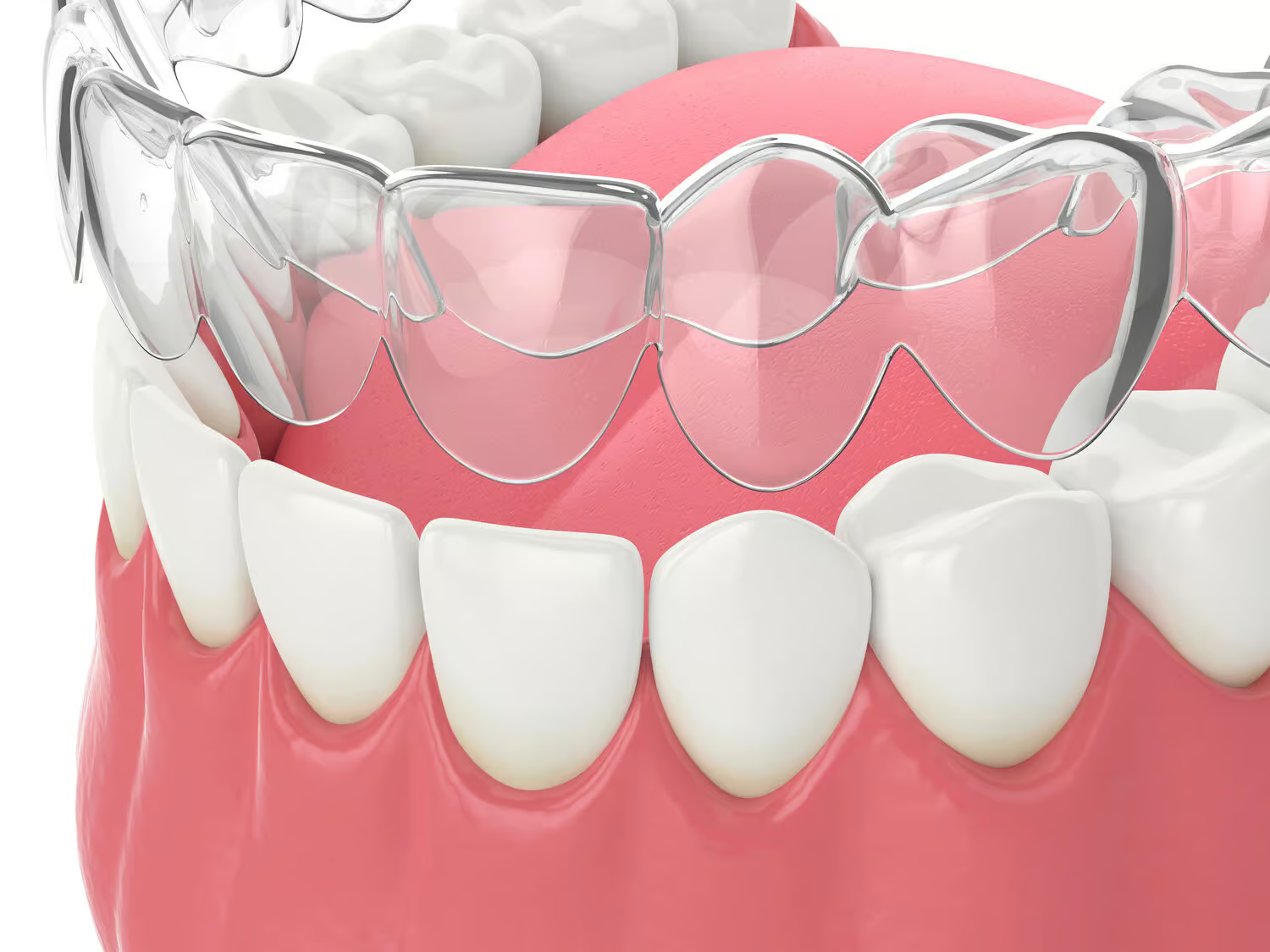
How Clear Aligners Gradually Straighten Teeth
This illustration shows how clear aligners move teeth into better alignment over time. Each custom aligner applies gentle pressure to specific teeth, gradually guiding them into a straighter position. As the patient progresses through the series of aligners, the teeth shift step by step toward the planned final alignment.
Clear Aligners FAQ
Common Questions About Clear Aligner Treatment
View more Options

Retainers

Complete Dentures