Knocked-Out Tooth in Waco? Call Now - WM Dentistry
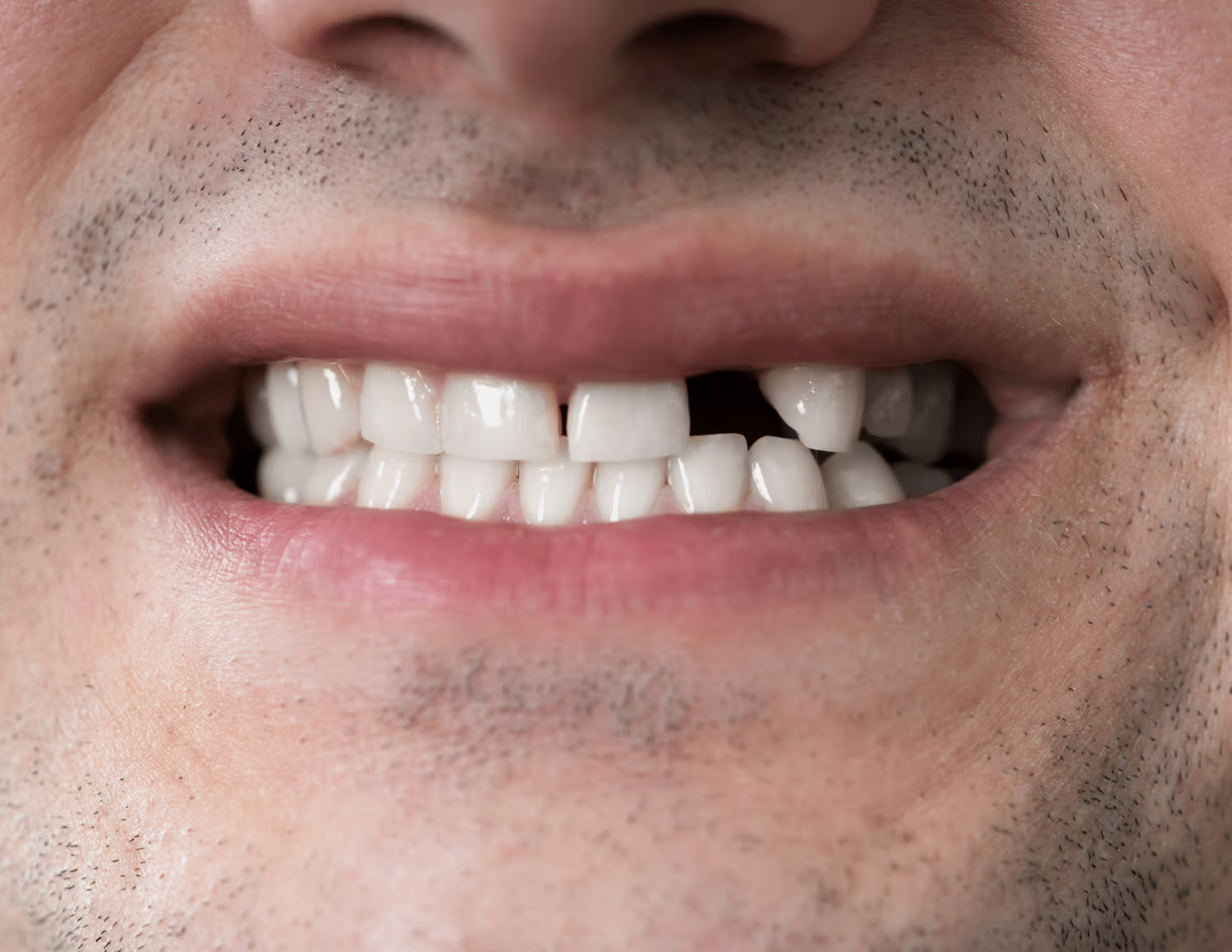
A Knocked-Out Permanent Tooth Is Always a True Emergency
If a permanent tooth just got knocked out of your mouth, stop reading and call us. This isn't one of those "wait and see" situations. It's the one dental emergency where minutes matter.
Here's the thing most people don't know until it happens to them. A knocked-out tooth has a short window before it can't be saved. The root surface starts drying out and dying almost immediately. Get it back in the socket, into milk, or tucked between your cheek and gum within the first hour, per international dental trauma guidelines. Do that, and the odds of saving that tooth go way up. Wait a few hours, and we're usually talking about a dental implant instead of a reimplanted tooth. We see this call every so often, usually after a fall or a bike wreck. Sometimes it's a foul ball to the face, or a hard elbow during a pickup basketball game. The story's always a little different. The urgency never is.
A few things make this injury different from a chipped or cracked tooth. The whole tooth is out of the bone. The ligament fibers that held it in place are exposed to air. And the clock starts the second it happens, not when you get around to calling someone.
So what should you do? Pick the tooth up by the crown, never the root. Rinse it gently if it's dirty, no scrubbing. Try to place it back in the socket if you can. Can't manage that? Keep it moist in milk or your own saliva, never dry, never in tap water. Then call our Woodway office right away and get in for a same-day appointment. Every minute you wait is a minute working against that tooth.
Save the Tooth in the First Critical Minutes
Here's the thing nobody tells you about a knocked-out tooth. The clock starts the second it happens, not when you get to a phone. What you do in the first few minutes matters more than almost anything we do later in the chair.
Pick the tooth up by the crown, the white part you'd normally see when you smile. Never touch the root. That thin layer of tissue on the root is what gives the tooth a real shot at reattaching. A fingertip can wipe it clean off in seconds.
If the tooth is dirty, rinse it for a few seconds with plain water. No soap, no scrubbing, no alcohol.
- Try to gently set the tooth back into its socket, facing the right way
- If it won't stay or that feels like too much, hold it between your cheek and gum
- Can't do either safely? Drop it in a small container of milk, not water
- Call our office right away and head in
Milk works because it's close to the body's own chemistry. It keeps those root cells alive longer than water or a dry napkin ever will. We've had patients show up with the tooth wrapped in a paper towel. By then it's usually too late for reimplantation, though we can still help with the socket and next steps.
Thirty minutes. That's the rough window where reimplantation odds are. Every hour after that, the chances drop.
Baby Teeth Don't Follow Adult Tooth Rules
Here's something a lot of parents don't know until it happens. If your child knocks out a baby tooth, you do not try to put it back in. That's the opposite of what you'd do for a permanent tooth, and it trips people up every time.
A baby tooth has a permanent tooth bud sitting right underneath it. Push that baby tooth back into the socket, and you risk damaging the adult tooth that hasn't even come in yet. So the rule flips. No rinsing and reinserting, no milk, no racing the clock. You just need to control the bleeding, keep your child calm, and get them seen.
How do you tell if it's a baby tooth or a permanent one? Age is your clue. Kids start losing baby teeth around age six, and that process runs through the early teens. A front tooth knocked out at age four is almost certainly a baby tooth. The same injury at age fifteen is almost certainly permanent. If you're not sure, don't guess.
This matters because the two situations call for different care, and different providers too. WM Dentistry works with adult patients on restorative and implant dentistry. A child's knocked-out baby tooth needs a pediatric dentist who handles kids' teeth day in and day out.
Here's the part parents relax about once they hear it. A knocked-out baby tooth is rarely a dental emergency in the way an adult tooth is. There's no minute-by-minute countdown. Still, get it checked. A dentist needs to confirm no root fragments are left behind and that the permanent tooth underneath wasn't hurt in the impact. Skipping that check is the real risk, not the missing tooth itself.
What to Expect During Your Emergency Visit in Waco
You call, we get you in. That's the short version. A knocked-out tooth is one of the few dental problems where minutes matter. Our team moves fast to get you into the chair at our Woodway office rather than making you wait on a callback.
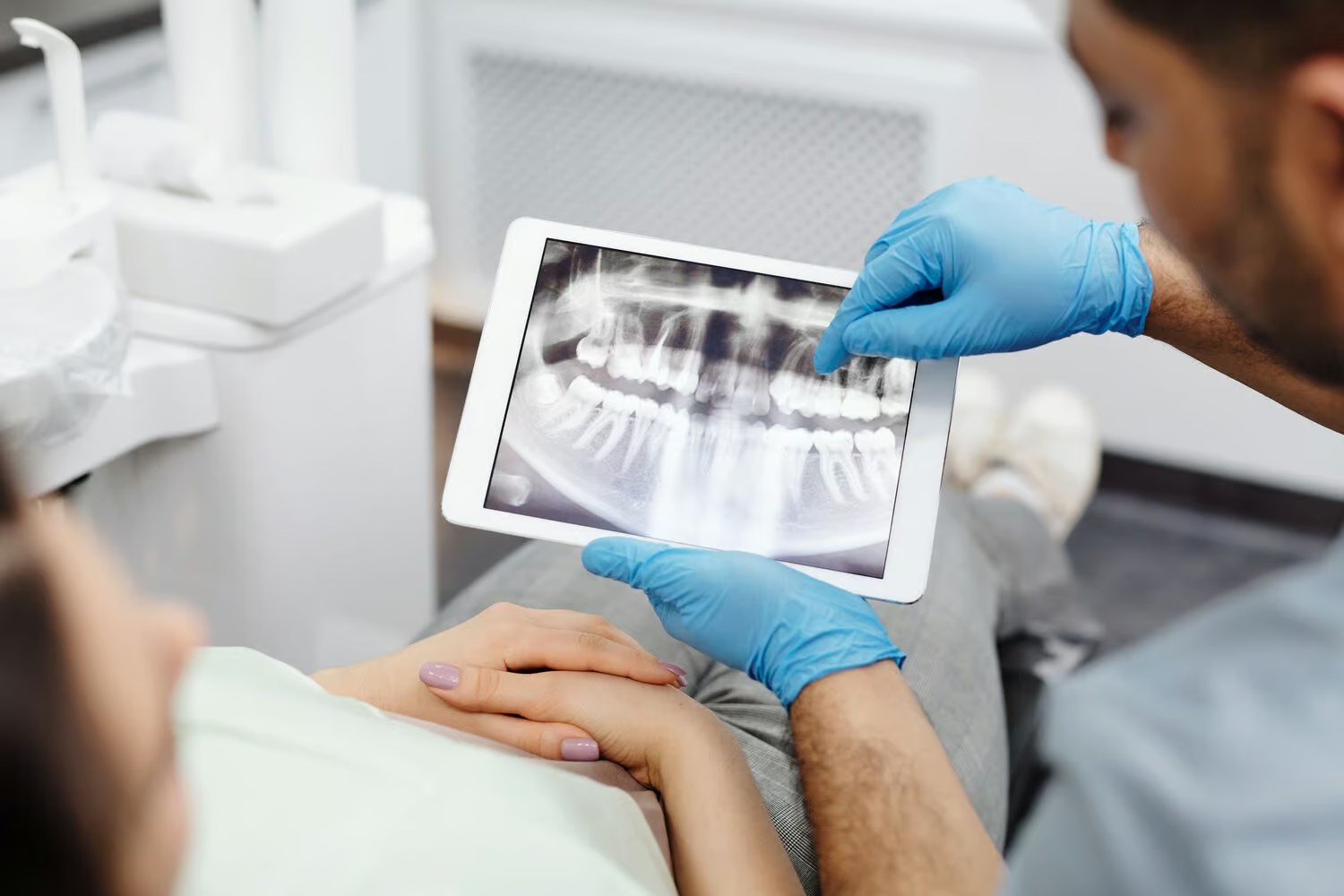
Once you're here, Dr. Morgan takes a quick look and gets an x-ray to see what's going on below the gumline. Sometimes the socket is intact and the tooth can go back in. Sometimes it can't. Either way, you'll get a clear answer, not a guessing game. If the tooth itself isn't viable, we talk through what rebuilding that space looks like. That might mean a dental implant or another way to restore the tooth, based on your bone, your bite, and how it happened.
We'll also check the teeth around the injury. A hard hit rarely affects just one tooth. Cracked enamel, loosened neighbors, a bruised jaw, these get missed when everyone's only focused on the obvious gap.
People are often more shaken up than they realize. That's normal. Our job in that first visit is to slow things down, explain the options plainly, and get you out of pain before we talk long-term plans. No pressure to decide anything on the spot beyond what needs to happen that day.
Expect a straightforward visit. Exam, x-ray, an honest read on the tooth, pain managed. Then a plan for what comes next once the emergency part is behind you.
When Reimplantation Isn't Possible: Long-Term Options
Sometimes the tooth just won't go back. Too much time passed, the root's damaged beyond saving, or the socket itself took too much trauma to support it. That's not a failure on anyone's part. It's biology, and it happens more than people expect.
So what now? You've still got real options, and none of them mean living with a gap. A dental implant is the most common path we walk patients through here at WM Dentistry. It replaces the tooth root itself, not just the visible crown. That gives you something solid to bite down on again. Some patients lose more than one tooth in the same incident. It might be a fall, a sports collision, or a car accident. For them, full mouth restoration can rebuild function and appearance together instead of treating each tooth as its own separate project.
Not every case calls for an implant right away. Bone needs time to heal, sometimes months, before it can support one. In the meantime, a partial denture can hold your bite and your smile steady. We've had patients come in worried that losing a front tooth meant showing up to work with a gap for half a year - it doesn't have to go that way.
Here's the honest part: the right long-term option depends on your bone, your bite, and how the tooth was lost in the first place. A tooth knocked out clean is different from one that came out with a fracture line running into the root. That's why the follow-up exam matters as much as the emergency visit did. Dr. Morgan will walk you through what your mouth needs, not just what sounds fastest. Because the goal isn't just filling a gap. It's giving you a tooth that works, looks right, and lasts.
What to do in the first 60 minutes
A knocked-out permanent tooth can often be saved - but only if you act fast.
- Pick it up by the crown (the chewing surface), never the root.
- Rinse gently with water or milk if dirty — don't scrub, don't dry it.
- Reinsert if possible, or store it in milk to keep it alive.
- Call us immediately. The best chance of saving the tooth is within 30–60 minutes.
Never attempt to reinsert a baby tooth. Call us for guidance instead.

Knocked-out Tooth FAQ
Had a tooth get knocked out? Here's some answers.
View more Options

Retainers
Root Canals