Retainers in Waco | WM Dentistry

Signs You Need a New or Replacement Retainer
Your retainer should fit snug and feel almost invisible once you're used to it. If it doesn't, something's changed.
The most common sign? It just feels tight where it used to feel fine. Teeth shift constantly, even years after braces or clear aligners. A retainer that suddenly pinches or takes real effort to seat is telling you your bite has moved. We hear this a lot from patients who wore theirs faithfully for a year, then got busy. Months later they pull it out of a drawer and find it barely clicks into place anymore. Other signs are easier to catch:
- Cracks, warping, or cloudy plastic on a clear retainer
- A wire retainer that's bent, loose, or pulling away from a tooth
- Visible gaps between the retainer and your teeth when you look in the mirror
- A whistle or lisp that wasn't there before
- Constant soreness after wearing it overnight, not just the first few nights
Any one of those on its own might not mean much. Two or three together, and it's time to get it looked at.
Here's the thing most people don't realize: a retainer that no longer fits isn't just uncomfortable. It can let your teeth drift further, and then the next retainer has to work harder to correct it. So waiting usually makes the fix bigger, not smaller. If you finished clear aligners or braces here and haven't been back in a while, that's worth a look too. We'd rather catch a loose-fitting retainer at a quick visit than have you come back in a year needing a full new impression. The shift by then has usually gone too far.
Choosing the Right Retainer Type for Your Bite
Not every bite needs the same retainer. Your teeth just finished moving, whether through clear aligners or traditional treatment. The retainer's job now is to hold that new position steady while your bone and gum tissue settle in around it.
We generally look at a few options depending on what your bite needs and how your teeth sit:
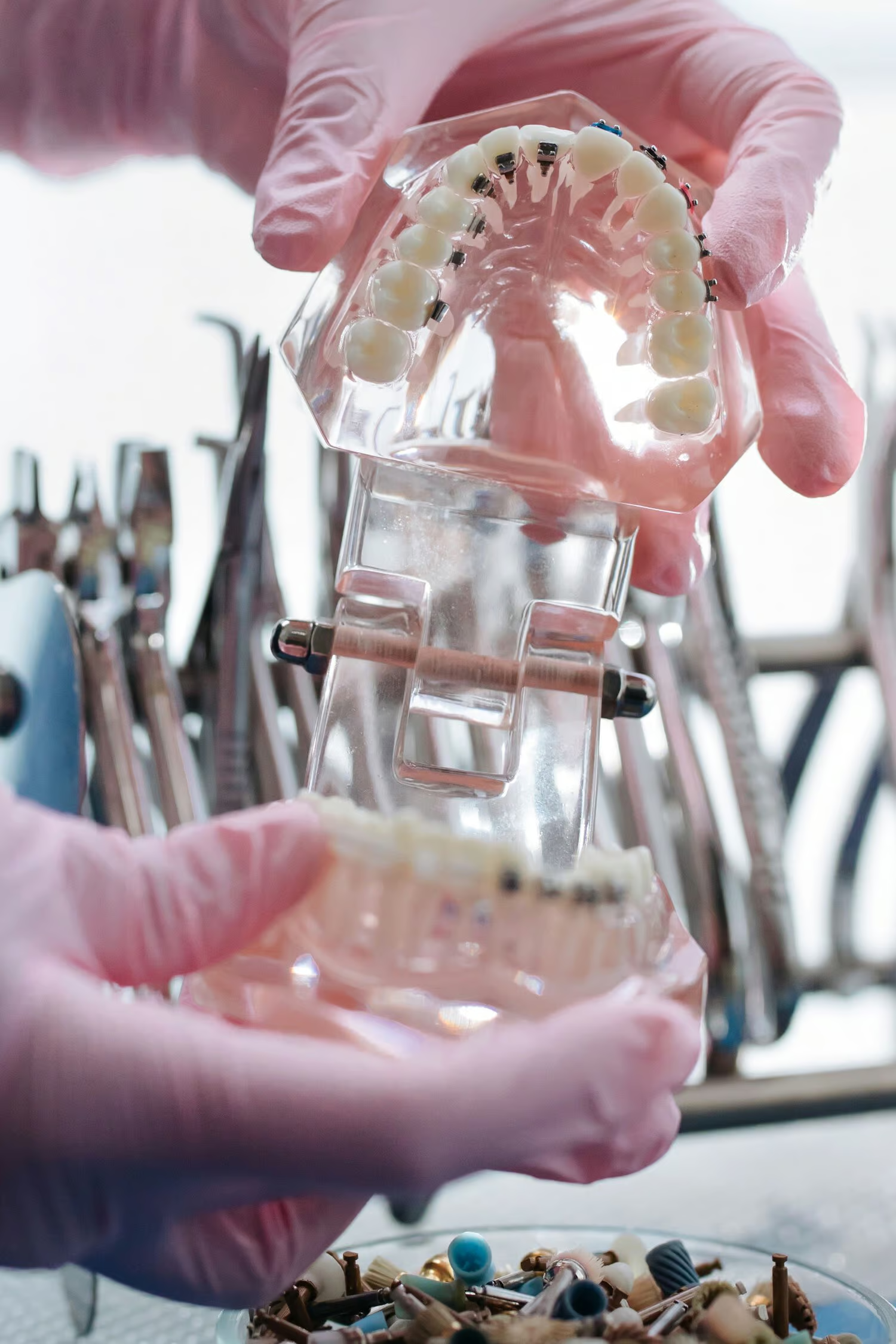
- Clear removable retainers, molded to fit snugly over your teeth, popular because they're nearly invisible
- Hawley retainers, the classic wire-and-acrylic style, durable and easy to adjust if your bite shifts slightly
- Fixed retainers, a thin wire bonded behind your front teeth for cases where round-the-clock stability matters most
So which one's right for you? It depends on how your teeth were positioned before treatment and whether you tend to clench or grind at night. It also depends on how consistent you'll be with wearing a removable one. Some patients love the flexibility of taking a retainer out to eat. Others do better with something bonded in place they don't have to think about.
Dr. Jeremy Morgan looks at your specific bite pattern before recommending a type, not a generic approach. Someone with a lower arch that crowded quickly before treatment often does better with a fixed option. Someone with a stable, well-aligned bite might be perfectly fine with a removable clear retainer worn mostly at night.
We'll walk through this with you directly, no guessing involved.
When a Retainer Issue Is an Orthodontic Problem
Not every retainer complaint is a retainer problem. Sometimes the retainer fits fine on day one and feels tight by day ten. That's not wear and tear, that's your teeth moving underneath it. A retainer only holds position it doesn't already have. If your teeth have drifted enough that the old retainer won't seat without pressure or pain, that's relapse. A new retainer built to the current position will lock in a smile that's off from where you finished treatment.
Here's how you tell the difference. A worn-out retainer usually still slides on, it's just loose or cracked or clouded from years of use. A relapse problem feels different. The retainer pinches one or two teeth, or you can't get it to snap in place no matter how you try. We hear this a lot from patients who wore a retainer for years, then stopped for a stretch. They pick it back up later expecting it to still work.
So what happens if that's your situation? A new retainer alone won't fix crowding or shifting that's already happened. That's a conversation about moving teeth back, not just holding them. For adults dealing with noticeable relapse, Invisalign or clear aligners is usually the more honest next step before we talk retainers again.
Fitting and Fabrication: What Happens at Your Visit
Getting a retainer isn't complicated, but it does take a couple of steps done right. Rush this part and the fit shows up wrong later. It usually shows up as a retainer that pops loose or presses on one spot all night.
Here's how the visit goes:
- Dr. Morgan checks your bite and the current position of your teeth, especially if you just finished clear aligner treatment.
- We take a digital scan or impression of your upper and lower arches.
- That mold gets sent off to fabricate your retainer, whether it's a clear tray style or a wire-and-acrylic design.
- You come back in for the fitting, where we check the edges, the bite contact, and how it seats against your gumline.
- We adjust anything that feels tight or pokes before you leave.
Most patients are surprised how fast the actual fitting appointment goes. It's usually short. The scan or impression takes longer than the fitting itself.
We see this every week with patients finishing up cosmetic work too, not just orthodontic cases. If you've had veneers or a smile makeover done through our office, a retainer helps protect that investment. It keeps teeth from drifting against the new restorations. That's a detail people don't always think about until we bring it up.
One thing we check closely at the fitting: whether the retainer seats fully without you forcing it. A retainer that needs muscle to snap into place isn't fitting correctly. We'll remake it rather than send you home with something that'll crack under pressure or wear your teeth unevenly. Comfort at the fitting appointment is the whole point. If it's not right that day, it won't get right on its own.
Protecting Your Retainer Through Waco Summers
Summer here is not gentle. Central Texas regularly pushes past 100 degrees from June through August, and that heat does not stay outside. Leave a retainer on a dashboard, in a gym bag in the trunk, or on a windowsill. You're looking at warped plastic within an hour. We see this every week once the weather turns.
Clear plastic retainers soften at surprisingly low temperatures. Most clear retainer material begins to soften at around 130°F, a threshold a parked car interior can clear in well under an hour, even on a mild day. A car interior parked in a Waco parking lot in July can climb well past 160 degrees. That's plenty hot to distort the fit permanently. Once that happens, the retainer no longer holds your teeth where they belong. It just sits there looking fine while doing nothing.
A few habits keep your retainer safe once the heat sets in.
- Never leave it in a car, even for a quick errand
- Skip the napkin wrap at lunch, it gets tossed more than you'd think
- Rinse with cool water only, hot tap water warps plastic almost as fast as sun does
- Keep the case in your bag, not loose in a pocket where it can crack
- Store it away from vents and windows at home during heat waves
Humidity plays a role too. Waco summers run humid, and a damp retainer case left closed for days invites bacteria. Let it air dry for a minute before closing the case.
If your retainer already feels tight, loose, or doesn't seat the way it used to after a hot week, give us a call. Sometimes it's just a cleaning issue. Sometimes the plastic has shifted shape. Either way, catching it early is the difference between a quick fix and starting the whole retention process over. We'd rather you check in too soon than not at all.
Why Your Retainer Stops Fitting
Teeth don't stop moving just because treatment's over - they keep shifting for years, and your retainer is what holds the line. A little pressure where it used to feel snug is usually the first sign your bite has changed. Left alone, that gap only grows, and the next fix gets bigger than the last one would've been. Catching it early is a quick adjustment. Waiting usually isn't so quick.
Retainers FAQ
What Patients Ask About Getting or Replacing a Retainer
View more Options
Replacing Missing Teeth
Smile Makeover