Complete Dentures in Waco: Get Your Confident Smile Back

Signs You May Need Complete Dentures
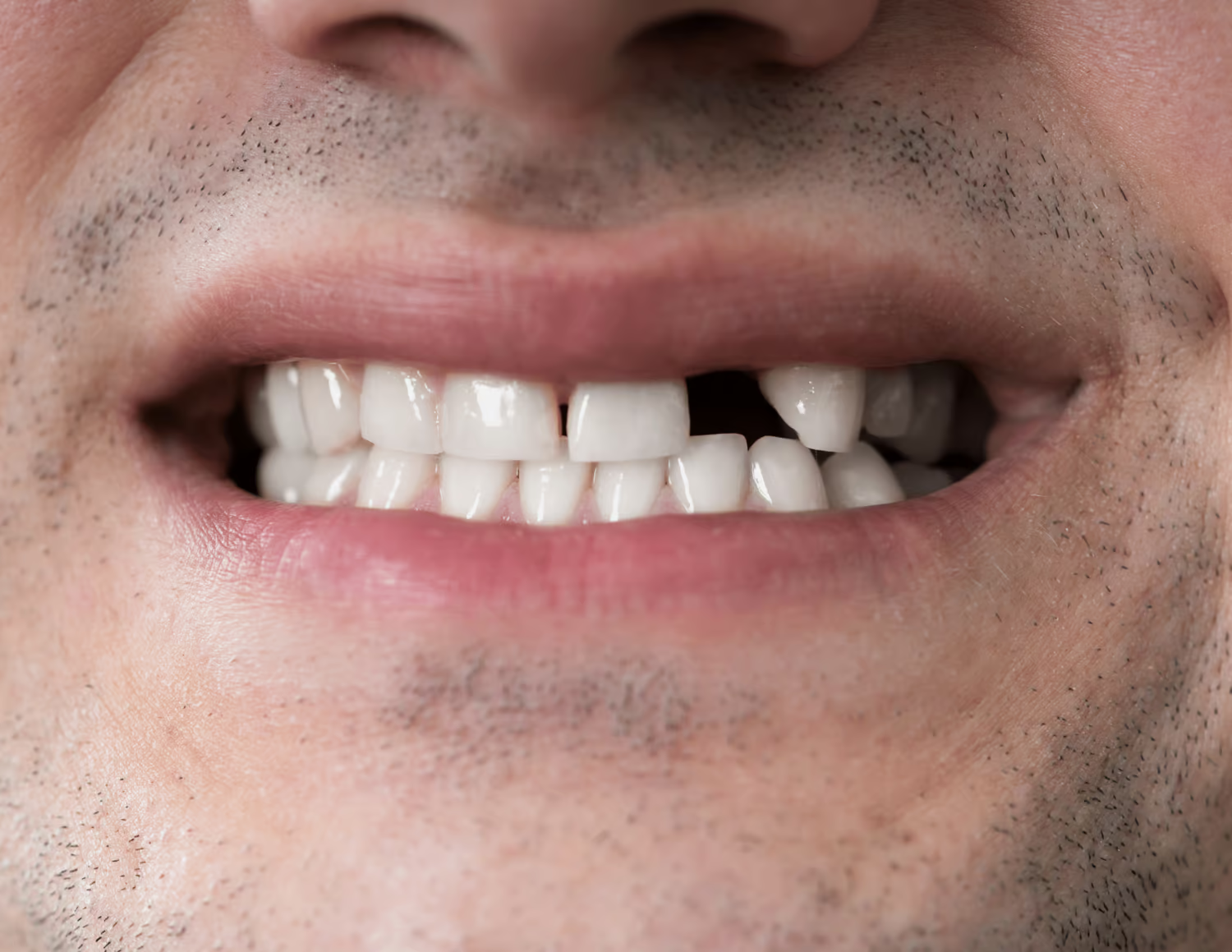
Most people don't wake up and decide they need Complete Dentures. It's usually a slow build. A tooth breaks, then another loosens, then eating corn on the cob starts to feel like a risk instead of a summer thing you enjoy.
Here's what we hear most often from patients sitting in the chair for the first time:
- You're missing most or all of your teeth on the top, bottom, or both
- Remaining teeth are loose, shifting, or held in by not much at all
- Chewing meat, bread crusts, or raw vegetables has become a chore, not a choice
- You're avoiding smiling in photos or covering your mouth when you laugh
- Gum disease or decay has taken so much bone and tissue that saving individual teeth isn't realistic anymore
Sound familiar? That's pretty common, and it's not something to feel embarrassed about walking in with.
Sometimes it's gradual bone loss from years of untreated decay. Sometimes it's one bad infection that takes several teeth down fast. Either way, once your mouth reaches a point where restoring individual teeth won't hold up long term, Complete Dentures become the more honest answer, not a fallback.
We've seen patients put this decision off for years out of worry it'll look fake or feel bulky. It doesn't have to. A denture built off a careful bite and jaw evaluation sits, speaks, and looks different than what a lot of people picture in their head.
If you're already avoiding certain foods or certain photos, that's your answer. The mouth is telling you something, worth listening to now rather than after another tooth gives out.
Complete Dentures vs. Partial Dentures: Which One Fits
Here's the question we get asked most in this exact situation: do you need complete dentures, or partial dentures? The answer comes down to one thing: how many natural teeth you still have and whether they're worth saving.
Complete dentures replace an entire arch, top or bottom or both. They're built for patients who've lost all their teeth in that arch, or who are about to, often due to advanced decay or gum disease that's left the remaining teeth unstable. Partial dentures work differently. They fill in gaps while your remaining healthy teeth stay put, anchored with clasps or precision attachments that grip onto the teeth you keep.
Neither option is better. They solve different problems.
A few signs point toward complete dentures instead of partial:
- Most or all teeth in an arch are already missing or failing
- Remaining teeth have deep decay, bone loss, or repeated infections
- Past dental work keeps failing and a fresh start feels more practical
- You want one stable, predictable solution instead of managing several problem teeth
If you've still got several strong, healthy teeth, partial dentures usually make more sense. No reason to remove teeth that are doing fine just to simplify things. We look at this closely during your exam, checking bone support and the condition of what's left before recommending either direction.
Some patients come in assuming they need a full arch replaced, and it turns out only a partial is necessary. Others hope a few teeth can be saved, and the honest answer is that complete dentures will serve them better long term. We'll tell you which one it is, plainly, based on what we see on your exam and x-rays. If you're weighing an implant-supported option down the road, that decision starts with this same first step.
Immediate vs. Conventional Dentures: Choosing Your Timeline
Here's the first real decision you'll make. Do you want teeth the same day your natural ones come out, or are you willing to wait for your gums to heal first? Both paths lead to a good outcome. They just get there differently.
Immediate dentures go in right after extraction, same visit. You walk out with teeth instead of gaps, which matters a lot if you've got a job interview, a wedding, or you just can't stomach the idea of being without teeth for months. The tradeoff is that your gums and jawbone will keep changing shape as they heal. The fit loosens over the following months, and you'll likely need adjustments, sometimes a reline, once the swelling settles down and the tissue finishes reshaping.
Conventional dentures take the slower road. We pull the teeth, let the tissue heal for several weeks to a couple months, then take impressions once things have settled. The fit tends to be more accurate from day one because we're building on healed, stable gums instead of a moving target.
So which one's right for you? Depends on what you're solving for.
- Need teeth immediately for work or an event coming up soon
- Comfortable managing an adjustment or two while healing finishes
- Prefer to skip the gap entirely, even if it means a follow-up reline later
We've had patients go both directions and be happy with it. Most of the time, the choice comes down to how much you can tolerate waiting versus how much you value a precise first fit. There's no wrong answer here, just the one that fits your life right now.
What to Expect During Your Denture Journey in Waco
Getting complete dentures isn't a one-visit thing. It's a process, and knowing what's coming next takes a lot of the worry out of it.
Most patients we see in Woodway and Waco start with a full exam. Dr. Morgan checks your gum tissue, any remaining teeth, and the bone underneath. If teeth need to come out first, that happens before we move forward with your dentures. Healing time varies person to person. Some folks are ready in a matter of weeks.
Here's roughly how the process unfolds:
- Exam and consultation, where we talk through your goals and check your mouth's condition
- Any needed extractions, followed by healing time
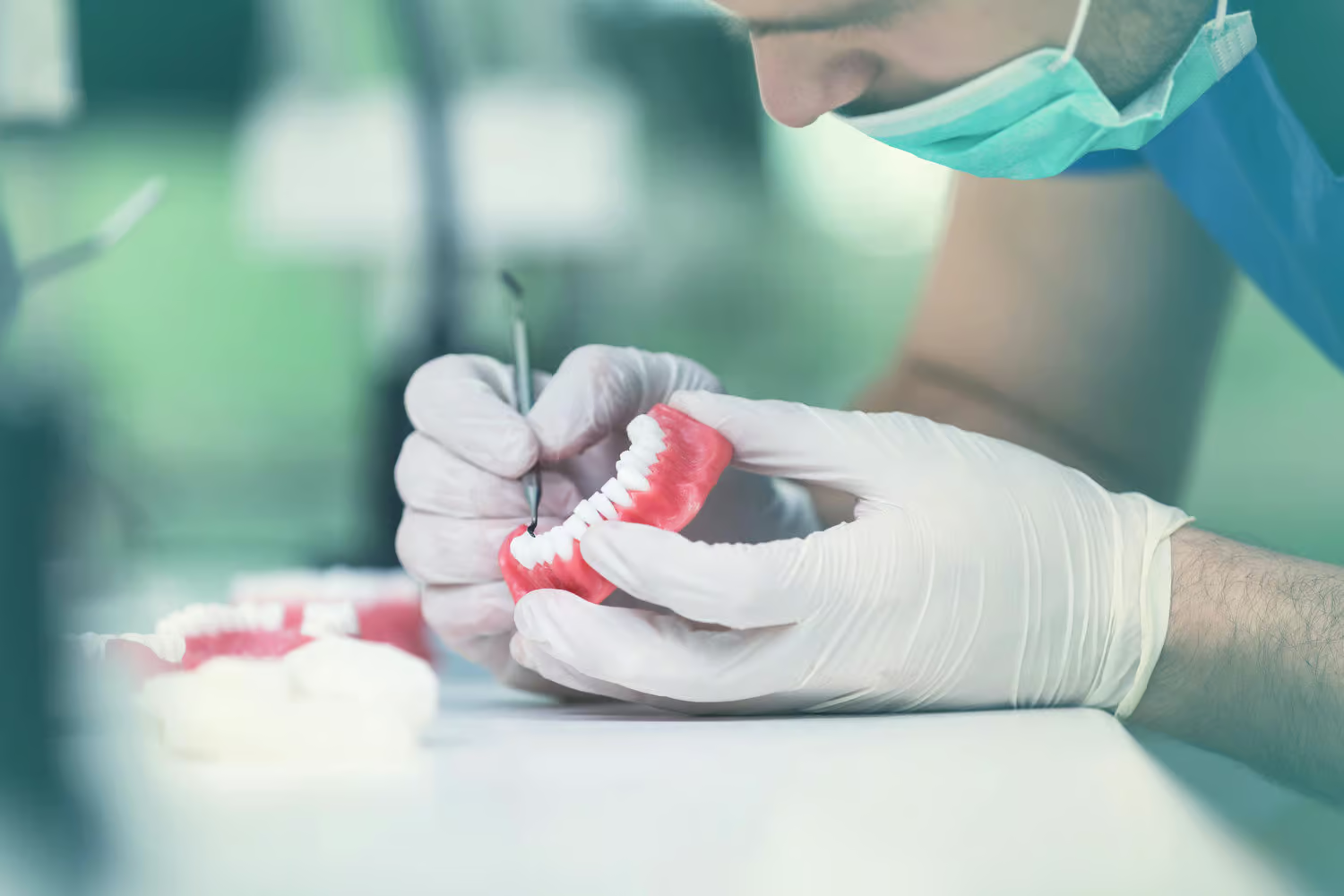
- Impressions and measurements, taken to build a denture that fits your mouth
- A fitting appointment, where you try the denture and we adjust for comfort and bite
- Follow-up visits, because your gums change shape as they settle
That last step surprises people. Your mouth keeps adjusting for months after you get your denture. We see this every week. Patients come back thinking something's wrong, and it's just normal settling. That's why same-day denture adjustments matter, small tweaks now save you bigger headaches later.
Some patients want more stability from day one. If that's you, ask about implant-supported dentures during your exam. It's worth a conversation before you commit to one path over the other.
Not sure how many visits you'll need? That depends on whether teeth need pulling first and how your gums heal. We'll walk you through your specific timeline once we've had a look.
Adjusting to Your New Dentures at Home
The first few days feel strange. That's normal, and it's not a sign anything's wrong. Your tongue and cheeks have to learn a new shape in your mouth, and that takes time.
Talking is usually the first thing patients notice. Certain words feel clumsy, and "S" sounds might come out with a slight whistle. Read out loud for a few minutes a day. Your speech usually smooths out within a week or two as your muscles adjust.
Eating takes patience too. Start with soft foods cut into small pieces, chew slowly, and use both sides of your mouth evenly. Skip anything sticky or overly chewy at first, that includes caramel, gum, and tough steak. As you get more comfortable, you can work your way back to a normal diet.
Expect some sore spots. Your gums are adjusting to pressure they haven't felt before, and a little irritation in the first couple weeks is common. Don't try to file down your own dentures or skip wearing them to "give your gums a break." That usually makes the fit worse, not better. If a sore spot doesn't ease up after a few days, that's what a same-day denture adjustment is for.
Saliva flow often increases at first, since your mouth is reacting to something new. Central Texas summers can make dry mouth feel more noticeable once things settle down, so keep water nearby.
Clean your complete dentures every day with a soft brush, not regular toothpaste, which can scratch the surface. Take them out at night. Your gum tissue needs that break to stay healthy long term.
Two paths to your new smile
- Immediate dentures - placed the same day your teeth are removed, so you're never without teeth
- Conventional dentures - built after your gums heal, for the most precise first fit
Either way, expect some adjustment. Your speech and bite settle in over the first few weeks, and follow-up visits fine-tune the fit as your gums finish healing. That's normal, not a sign something's wrong.
Complete Dentures FAQs
Answers to the most common questions about dentures
View more Options
Lost Filling or Crown

Same-Day Appointments