Sealants in Waco | WM Dentistry
Signs Your Teeth Need Extra Protection Against Decay
Not everyone needs a sealant. But some mouths work overtime just to keep cavities away. That's usually obvious once we look closely during an exam.
Deep grooves are the biggest tell. Molars with narrow, pitted chewing surfaces trap food and bacteria no toothbrush bristle can reach. Run your tongue across your back teeth right now. Feel any deep dips or ridges? That's exactly the terrain sealants are built for.
A few other patterns tell us protection is worth talking about:
- You've had more than one filling in the last few years, especially on back teeth
- Your bite naturally traps popcorn hulls, seeds, or bits of food no matter how carefully you floss
- Your enamel looks stained or slightly rough in the grooves, even after a cleaning
- You're going through a stretch of dry mouth from medication, stress, or age related changes in saliva flow
We see that last one more than people expect. Saliva does a lot of quiet work rinsing sugar and acid off your teeth, and when it slows down, decay risk climbs fast, even for adults with solid brushing habits.
Here's the thing, cavities don't always hurt until they're already deep. A tooth that feels fine at your last cleaning can pick up a small cavity in the grooves within a year. That risk goes up if the tooth has already needed a filling once before. Fillings fix decay after it happens, sealants are about not needing that filling in the first place. If your exam shows deep grooves or a history of repeat decay in the same spots, that's the moment worth acting on. Don't wait through another checkup to see if it gets worse.
Deciding If Sealants Make Sense for Kids and Adults
Here's the honest answer: sealants aren't just a kid's treatment. That surprises a lot of people the first time we bring it up.
Our practice sees adult patients. A good number of them are candidates for sealants on back molars that never got treated as a teenager. Deep grooves in the chewing surface trap food and bacteria no toothbrush can fully reach. If you've had two or three fillings in the same molar over the years, that's usually the tell. We're not guessing, we're looking at a pattern your own teeth have already shown us.
So who shouldn't bother? If your molars are smooth and your cavity history is clean, sealants probably won't add much. The same goes if your last few checkups came back with no new decay. That's a fair thing to ask us at your next visit, not something you need to chase down on your own.
Teens moving into adult care are a common gray area. A wisdom tooth that finally comes in can still be a good candidate well into adulthood. So can a molar that was skipped over years ago. We look at it during an exam, not as a separate guessing game.
One more thing worth saying plainly: sealants work as prevention, not repair. If a tooth already has a cavity forming under the surface, a filling is the right call. Sealants won't fix what's already started. That's a different conversation, and we'll tell you straight which one you need.
Understanding Sealant Coverage in Waco
Sealants aren't just a kid's treatment. Plenty of adults in Waco still have deep grooves in their molars that never got sealed growing up. Those grooves are exactly where decay likes to start. A thin coat of sealant fills those tiny pits and fissures. Food and bacteria can't settle in and cause trouble later.
Coverage works a little different depending on your plan. Most dental insurance treats sealants as a preventive service, similar to a cleaning or fluoride treatment. Some plans cover them fully for certain age groups. Others split the cost with you, and a few limit how often they'll pay for a new sealant on the same tooth. We're not going to quote you numbers here, every plan reads differently, but we will tell you what we see. If you're not sure how your plan handles preventive care, it's worth understanding the basics of how dental coverage works before your visit.
Here's the thing most people don't know until they ask: coverage often depends on which tooth and why. A molar with a deep groove and no decay history reads differently to an insurer. A molar that's already had a small filling reads differently too. That's why we look at your mouth first, then talk about what makes sense.
When Sealants Aren't the Right Fit
Let's be straight about this one. Sealants work on healthy, cavity-free molars, usually back teeth with deep grooves that catch food. Those spots never quite get clean no matter how well you brush. If a tooth already has decay sitting in it, a sealant won't fix that. It'll just seal a problem in place. That's not what you want.
Here's where it gets specific to adult patients, since sealants get talked about mostly for kids. If you've already got a filling in that tooth, a sealant isn't going in on top of it. The filling is doing that tooth's protective work now. Same goes for a tooth with a crack, a large existing filling, or a tooth that's already had a root canal. Those situations call for a different kind of restorative approach, not a sealant.
Your molars might be smooth, tightly grooved, or free of cavities for years of checkups. If so, you might not need one. Some people's tooth anatomy just doesn't trap debris the way others' does. We see this every week during exams. Not every back tooth needs a sealant. We'll tell you that straight instead of suggesting one just because it's on the list of things we do.
So how do you know which category you're in? That's exactly what an exam sorts out. Dr. Morgan checks the grooves, checks for existing decay or restorations, and gives you a real answer, not a default one. If a tooth needs a filling instead, we'll say so. If it needs nothing at all, we'll say that too.
What Happens During a Sealant Appointment
Sealants are quick. There's no needle, no drilling into healthy tooth structure, no downtime after. Most patients are in and out of the chair fast. It's about the time it takes to finish a cup of coffee in the waiting room.
Here's how it goes, step by step:
- Dr. Morgan or a team member checks the tooth first. The grooves have to be clean and dry before anything else happens.
- We clean the chewing surface and rinse it. Any leftover food or plaque gets removed so the sealant can bond properly.
- A mild solution is applied to the tooth for a few seconds. This roughs up the surface just enough for the sealant to grip.
- We rinse and dry the tooth again. Moisture is the enemy here, it breaks the bond before it even forms.
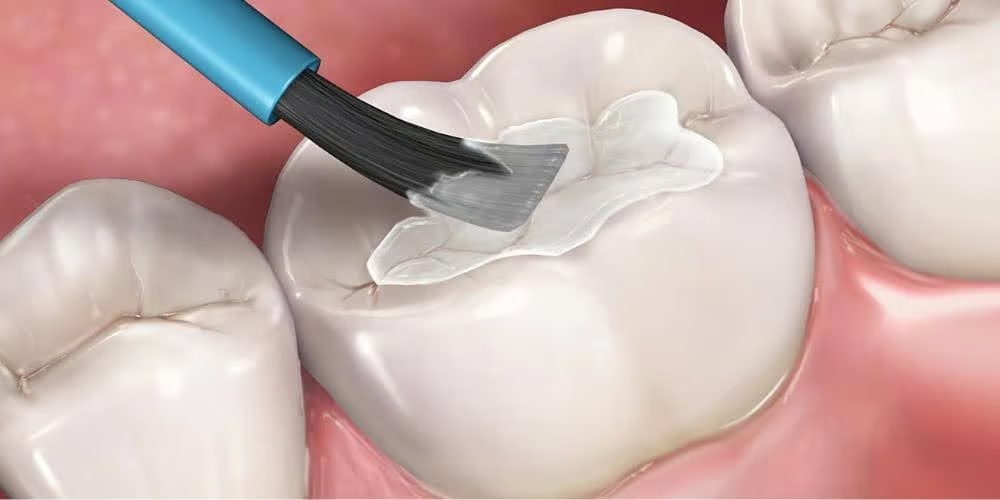
- The sealant material goes on in a thin layer, painted right into the grooves and pits.
- A curing light hardens it in place, usually in under a minute per tooth.
And that's it. No numbing, no soreness, no waiting around for anything to settle. You can eat and drink normally right after you walk out.
Most adults need this for back molars. That's where the deepest grooves sit and where a toothbrush bristle can't always reach. We see this come up during exams pretty often. Someone mentions a molar that's given them trouble before, and sealants come up as a way to protect it going forward.
One thing worth knowing: sealants get checked at your regular cleanings and hygiene visits. If one wears thin or chips, we catch it early and touch it up. That's the whole appointment, start to finish, no surprises.
Could you use a sealant?
Run your tongue over your back teeth. Feel any deep dips or ridges? That's exactly where sealants help most. A few other signs worth knowing:
- You've had more than one filling on the same tooth over the years
- Food always gets stuck in the same spot, no matter how carefully you floss
- The grooves look stained or rough, even right after a cleaning
The appointment itself is quick - no needle, no drilling, no downtime. We paint a thin coating into the grooves and harden it under a light, so food and bacteria never get the chance to settle in and start a cavity.
Sealants FAQs
Answers to the most common questions about tooth sealants.
View more Options

Dental Crowns
Composite Fillings