Composite Fillings in Waco: Natural-Looking Repairs That Last
Signs You Might Need a Composite Filling
Most people don't wake up thinking about a small dark spot on a molar. They notice it while flossing, or a dentist points it out during a routine visit. That's usually how a cavity gets found, quietly, before it turns into something bigger.
So what tells you it's time? Here's what we look for and what patients usually notice first:
- A sharp twinge when you bite down on something sweet or cold
- A rough spot on a tooth that your tongue keeps finding
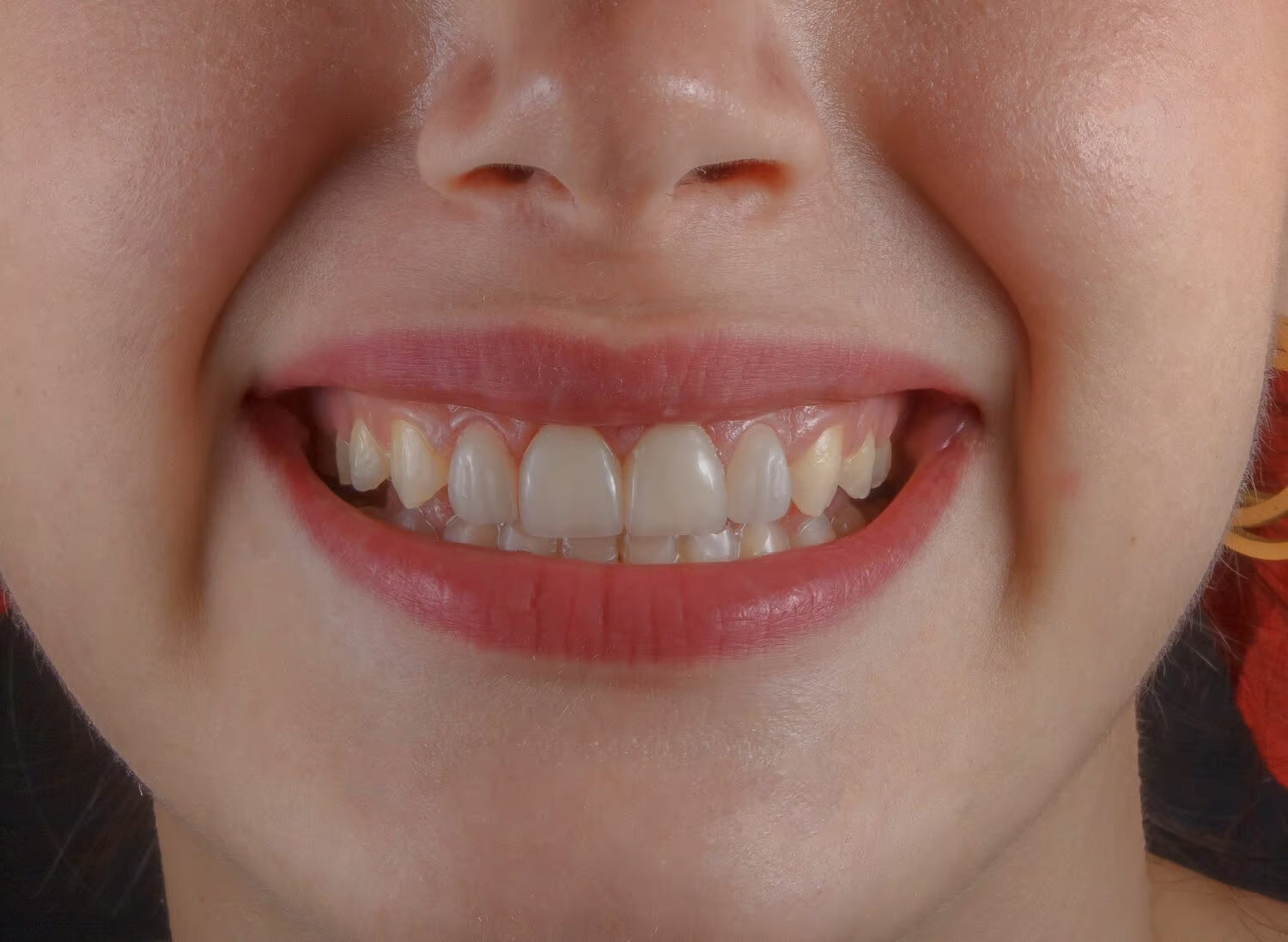
- Visible discoloration, a small brown or gray patch that wasn't there before
- Sensitivity that lingers after hot coffee or ice water
- A small chip or crack from biting something hard
Not every one of these means you need a filling right away. But if two or three show up together, that's usually a sign the decay has moved past the enamel. We see this every week, someone comes in for a cleaning and mentions "oh yeah, that tooth's been a little sensitive" like it's nothing.
Composite vs. Old Metal Fillings: Why Tooth-Colored Is Now Standard
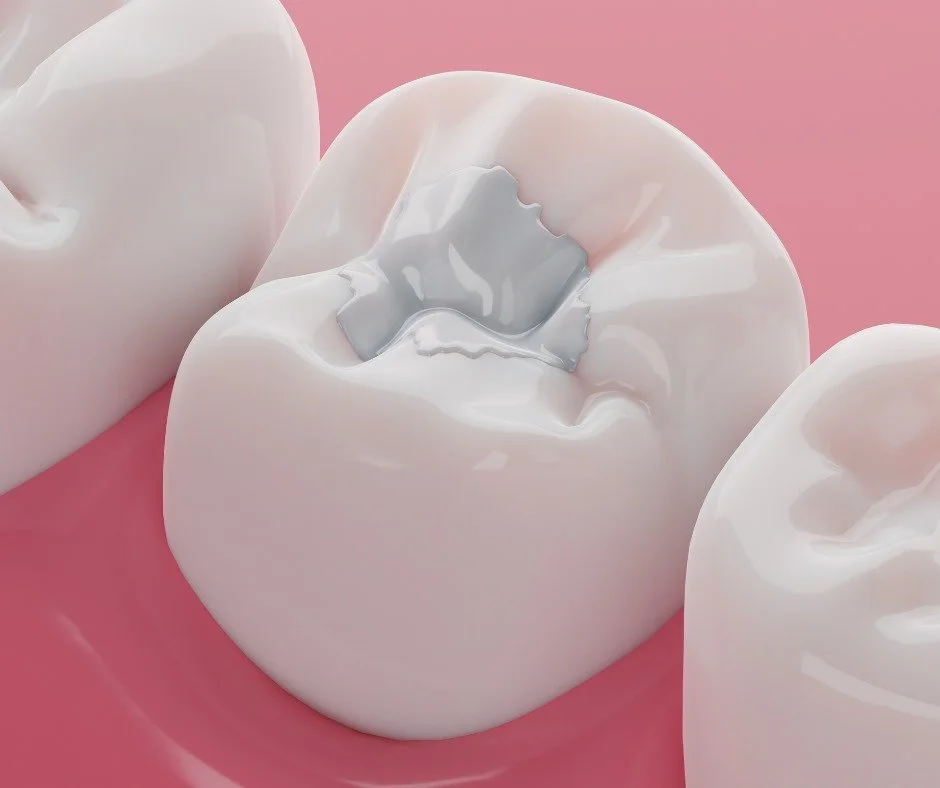
Metal fillings used to be the only real option. They still show up in a lot of mouths around Waco, especially on patients who grew up getting cavities filled back in the 80s and 90s. Silver amalgam works, sort of. It just doesn't work well.
Here's the real difference. Amalgam sits inside a tooth like a plug, it doesn't bond to the enamel at all. Composite resin bonds to the tooth structure itself, so less drilling is needed to hold the filling in place. That means we keep more of your natural tooth. Old-school metal fillings often required removing healthy tooth just to create a shape the material could mechanically grip.
And then there's the look. Silver fillings darken over time, sometimes turning teeth gray from the inside out. Composite matches your enamel shade the day we place it, and it stays that way. Nobody notices it's there.
Someone opens their mouth for a routine check and points at an old metal filling they've had for twenty years, asking if it needs to come out. Sometimes yes, sometimes no. But when a metal filling does need replacing, composite is what goes back in. That's just standard now, not a special upgrade.
There's a temperature issue too. Metal expands and contracts with hot and cold faster than your natural tooth does. Over years, that stress can crack the tooth around the filling. Composite expands at close to the same rate as enamel, so that stress is lower.
None of this means every old filling is a problem. If it's not broken, not leaking, not causing pain, we leave it alone.
When a Filling Isn't the Right Treatment
Not every cavity gets a filling. That's the honest answer, and we'd rather tell you now than after you're in the chair.
A composite filling works when there's enough healthy tooth structure left to build on. Once decay eats past a certain point, or a crack runs down toward the root, filling material doesn't have anything solid to hold onto. Someone comes in expecting a quick fix and the tooth needs a crown instead more often than you'd think. Same goes for a tooth that's already cracked from grinding or an old injury. A filling might hold for a while, but the crack keeps spreading underneath it. That's not a fix, that's a delay.
Deep decay near the nerve is another line. If the tooth's aching on its own, waking you up at night, or reacting sharply to hot and cold and not settling down, that's usually past filling territory. That's a root canal conversation, not a filling one.
And a broken tooth from biting down on something hard? Depends entirely on how much tooth is left. Sometimes bonding handles it. Sometimes it doesn't.
Here's the thing worth knowing before you call: a lost filling or crown doesn't automatically mean you need the same thing put back. The tooth underneath may have changed since that filling went in years ago. We check that first.
So if you're staring down a toothache wondering whether this is a simple problem or a bigger one, that's the right question to be asking. Not every dental problem has a small answer. We'll tell you straight which one you're dealing with, and we won't build a filling on a tooth that needs more than that.
What Happens During a Composite Filling Visit in Waco
Most patients picture a filling as a long, uncomfortable ordeal. It's not. A composite filling visit usually runs 30 to 60 minutes, start to finish, depending on how many surfaces need work.
Here's the general flow. Dr. Morgan numbs the area first, so the actual work is comfortable, not just tolerable. Then he removes the decayed or damaged part of the tooth. Only the compromised part comes out - the rest of your tooth stays exactly as it is. That's one of the real advantages of composite over older filling materials. Less tooth structure has to go.
Once the tooth is prepped, the composite resin goes in in thin layers. Each layer gets cured with a light before the next one is added. This layering is what gives composite its strength and its natural color match. We're not just filling a hole, we're rebuilding the shape of the tooth so it bites and feels the way it did before.
Last step is shaping and polishing. This part matters more than people think. A filling that's slightly too high will feel off the second the numbness wears off, so we check your bite carefully before you leave. You'll be able to eat normally again once the numbness fades, usually within a couple hours.
Most patients tell us they can't even find the filling in the mirror afterward. That's the point. No dark edges, no metal flash when you smile, just a tooth that looks like a tooth.
Protecting Your Filling After Treatment
A composite filling is strong, but it's not invincible. The first 24 hours matter most. Your bite may feel a little different while the numbness wears off, that's normal, give it time before judging how it feels.
Avoid biting into anything hard on that tooth for the rest of the day. Ice, popcorn, and pen caps are the usual suspects we warn people about. We've seen more than one composite filling crack from someone testing it out on a piece of hard candy the same afternoon.
Once the tooth settles, composite fillings hold up well to normal chewing and everyday habits. Good brushing and flossing around the filling matters just as much as it does anywhere else in your mouth. Composite doesn't decay, but the tooth around it still can.
- Skip extremely hard foods on that tooth for the first day
- Keep up your regular brushing and flossing routine
- Mention any grinding or clenching habits at your next visit
- Watch for sensitivity that lingers past a week or two
If you grind your teeth at night, tell us. That habit wears down fillings faster than anything else we see, and it's an easy thing to plan around once we know it's happening.
Most patients don't think about their filling again after the first few days. That's the goal. A filling that blends in and stops calling attention to itself is doing its job. If something feels off weeks later, a rough edge, a sharp catch when you floss, don't wait it out. A quick adjustment now is a lot simpler than dealing with a bigger problem later.
Why composite instead of metal?
Composite bonds directly to your tooth, so less natural structure has to be removed to hold it in place. A few other differences worth knowing:
- Matches your enamel shade, no dark spot when you smile
- Won't expand and contract with hot and cold the way metal does
- Placed in thin layers, each hardened with a curing light, for a precise fit
The visit usually takes 30 to 60 minutes, and most patients can't find the filling in the mirror afterward.
Composite Filling Questions
Straight answers about tooth-colored fillings, from what to expect in the chair to after you leave.
View more Options

Implant Dentistry

Dental Bridges