Toothache Relief in Waco | WM Dentistry

Common Causes Behind Sudden Tooth Pain
Tooth pain doesn't come out of nowhere. Something is going on under the surface, and it's one of a handful of usual suspects. We see this regularly in our Woodway office, patients who wake up fine and by afternoon can't chew on one side of their mouth.
Decay is the most common cause we find. A cavity that's been quietly growing can finally reach the nerve. That's when a dull twinge turns into something you can't ignore. Cracked teeth are another big one. This happens often in patients who grind at night or bite down on something hard without thinking twice. Sometimes the crack is so small we need imaging just to confirm it's there.
Infection is the cause we take most seriously. When decay or a crack goes untreated, bacteria can work their way into the pulp and cause an abscess. That kind of pain tends to throb and keep you up at night. It sometimes brings swelling or a bad taste along with it. Losing a filling or crown can also expose sensitive tooth structure that was never meant to be out in the open. That turns everyday hot or cold drinks into a wince-inducing event.
- Deep decay reaching the nerve
- A cracked or fractured tooth, often from grinding or biting something hard
- An infection or abscess forming at the root
- A missing filling or crown leaving the tooth exposed
- Gum irritation around a tooth that's shifting or erupting
Here's the thing, though. You can't always tell which one it is just by how it feels. Sharp pain when you bite down could be a crack, or it could be something deeper. That's exactly why we don't guess.
Dental Emergencies in Waco: Signs You Shouldn't Ignore
Some tooth pain fades on its own. Some doesn't, and that difference matters more than people think. A dull ache that comes and goes after cold water is worth watching. A throb that wakes you up at 2 a.m., or swelling along your jaw, is a different situation entirely.
Here's what tells us a patient needs to be seen now, not next week. Pain that's sharp and constant, especially if it's worse when you bite down. Swelling in the face, cheek, or gum near the tooth. A bad taste or visible pus around a tooth, that's often infection, not just sensitivity. Fever along with tooth pain. Any of these on their own is enough reason to call.
We also treat things that show up fast and obvious: a broken tooth from biting something hard, a knocked-out tooth from a fall or a hit during a weekend game, and a lost filling or crown that suddenly exposes a nerve. These aren't "wait and see" situations. The longer a cracked or exposed tooth sits untreated, the more it hurts and the more it costs to fix.
Not sure if what you're feeling counts as an emergency? That's a fair question, and most people aren't sure either. A good rule: if the pain is changing your day, keeping you up, or getting worse instead of better over 24 to 48 hours, don't wait it out.
We offer Same-day Appointments for exactly this reason.
When a Toothache Can Wait Instead of Needing a Same-Day Visit
Not every toothache means drop everything. A dull ache after eating something cold, gone in a few minutes, usually isn't an emergency. Same with mild sensitivity that shows up once and doesn't come back. Your mouth does react to temperature and pressure sometimes, and that's normal wear, not necessarily a problem brewing underneath.
Here's a rough way to think about it. If the discomfort is faint, comes and goes, and doesn't wake you up at night, you can often watch it for a day or two. Try warm salt water rinses, avoid chewing on that side, and see if it settles down. Usually, though, when someone calls us about a toothache, it's not the mild kind - it's the kind that's already interfering with eating, sleeping, or talking.
So what separates "wait and watch" from "call today"? A few signs matter more than others:
- Pain that's sharp, throbbing, or getting worse over 24 to 48 hours
- Swelling in your face, gum, or jaw, even slight
- A bad taste or smell that won't go away
- Pain triggered by biting down, not just temperature
- Any fever alongside the tooth pain
If you're seeing any of those, don't wait it out. That combination usually points to decay that's reached the nerve, a crack you can't see, or an infection starting to spread. None of those improve on their own.
We get it, dental visits aren't anyone's favorite errand. But there's a real difference between "this is annoying" and "something's wrong in there." If you're on the fence, a same-day evaluation costs you almost nothing in time and tells you exactly which situation you're in.
What Happens During a Same-Day Pain Evaluation
You call because a tooth's been throbbing since last night. Or you bit down on something and felt a jolt that scared you. Maybe that's decay that's worked its way deeper than a filling can fix, or a crack you can't even see yet. We get you in, we look, we tell you what's going on before we talk about doing anything.
Here's roughly how the visit goes:
- We ask what you're feeling. Sharp, dull, worse with cold, worse when you lie down. Each answer points somewhere different.
- Dr. Morgan examines the tooth and the surrounding gum and bone. Sometimes the pain you feel isn't even coming from the tooth you think it is.
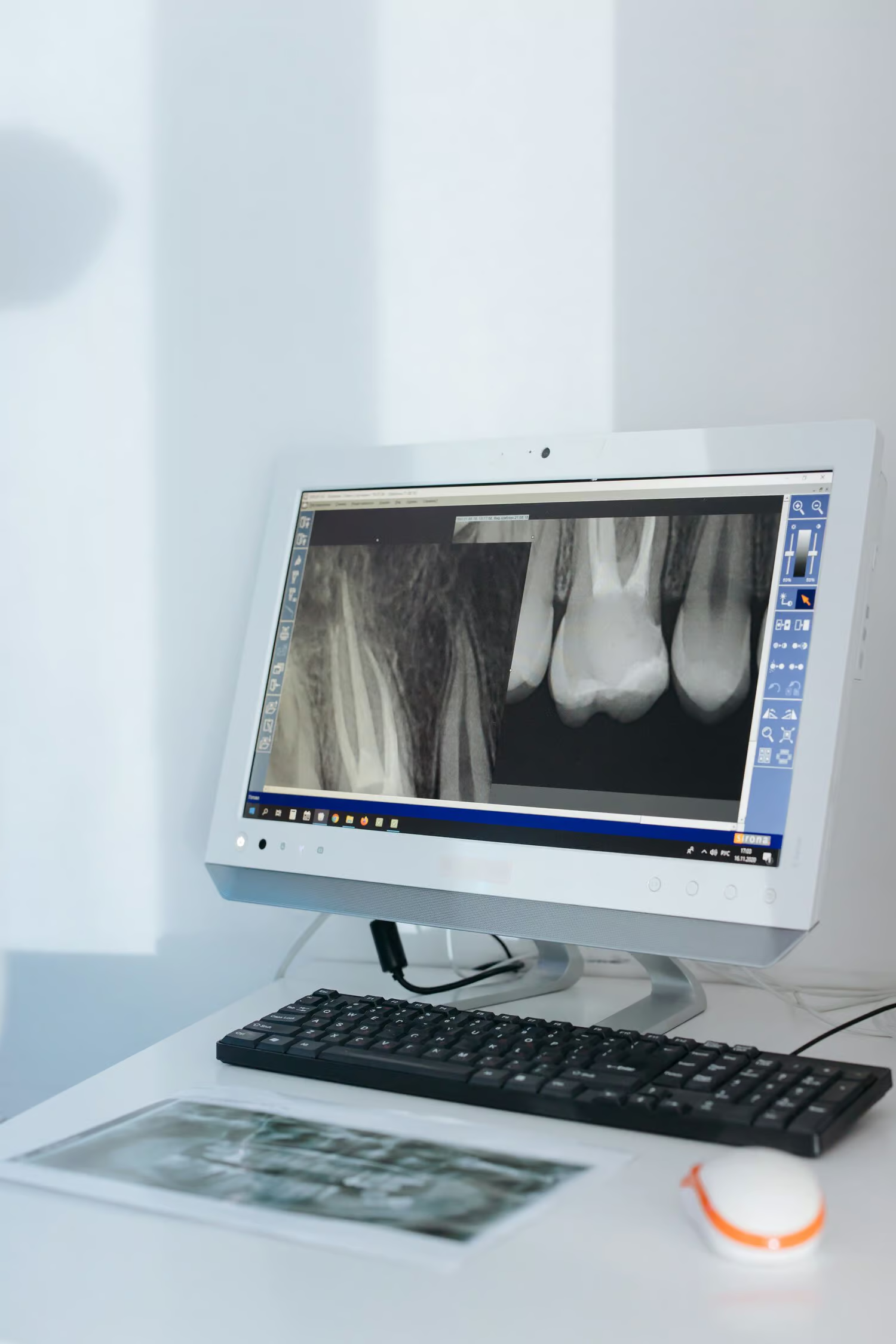
- If we need to see below the surface, imaging shows us the extent of it, whether it's a small area of decay or something reaching the nerve.
- We explain what we found in plain terms, no jargon, and walk through what's causing the pain.
- We stabilize the problem and lay out next steps, whether that's a filling, a root canal, or something else entirely.
We're not guessing your way into the worst-case scenario. That's not how Dr. Morgan works, and it's not how we approach patients here in Woodway. If a filling solves it, that's what we recommend. The exam itself is about finding the source and getting you comfortable, not committing you to treatment on the spot.
Relieving Tooth Pain at Home Until Your Appointment
So you've got a toothache and you can't get in until tomorrow. What do you do tonight? Rinse with warm salt water first, plain and simple. It won't fix the problem, but it calms the tissue around the tooth and clears out debris that might be making things worse.
Over the counter pain relief helps too. Ibuprofen tends to work better than acetaminophen for tooth pain. It cuts down on inflammation, not just the pain signal. Take it as directed on the label, and don't skip doses waiting to see if you "really need it." A cold compress on the outside of your cheek can also take the edge off, especially if there's any swelling.
Here's what not to do. Don't put aspirin directly on the gum or tooth, that's an old habit that can burn the tissue. Don't chew on that side of your mouth. And don't ignore heat sensitivity or a bad taste that won't go away, those are signs of infection, not just a cranky nerve.
- Rinse with warm salt water, several times a day
- Take an anti-inflammatory like ibuprofen as directed
- Use a cold compress if there's swelling
- Avoid chewing on the painful side
- Skip anything sugary, hot, or ice cold
Home care buys you time, it doesn't buy you a cure. We tell patients this every week - a toothache that eases up for a day or two isn't gone, it's just resting. The nerve is either healing on its own from something minor, or it's dying. Either way, the pain is about to come back worse. That's why we build in same-day appointments for patients in pain. Don't wait through a weekend hoping it settles down on its own.
What's Really Causing Your Toothache
Tooth pain almost always has a specific cause - decay that's reached the nerve, a crack you can't see, an infection, or a filling that's come loose. The type of pain is a clue: sharp when you bite down often means a crack, while a throb that wakes you up points somewhere deeper. We don't guess. Imaging shows us exactly what's going on before we talk about fixing it.
Toothache Relief FAQ
What Patients Ask When a Toothache Won't Let Up
View more Options

Dental Crowns

Dental Bridges