Veneers in Waco: A Natural-Looking Smile Without the Overdone Look

Signs You're a Good Candidate for Veneers
Most people who call us about veneers aren't dealing with one big problem. They're dealing with a handful of small ones that add up. Maybe your front teeth whitened fine years ago but one tooth never matched the rest. Maybe there's a chip you've been covering with your hand in photos, or a gap that's been there since you can remember. That combination, color plus shape plus spacing, is what veneers are built to solve.
Here's what we look for in a consult:
- Discoloration that whitening didn't fully correct, often from old fillings, tetracycline staining, or a tooth that darkened after an injury
- Chips or worn edges on one or several front teeth
- Minor gaps or slight overlap you'd rather not fix with braces
- Teeth that are naturally short, thin, or uneven in shape
- Healthy tooth structure and gums, with no active decay or bite problems that need treating first
That last point matters more than people expect. Veneers work on teeth that are already stable. If there's a cavity brewing under that discoloration, we're treating that first. Veneers go on top of a healthy foundation, not instead of one.
Most of the time, the case that walks through our door isn't a full smile overhaul. It's several front teeth, the ones you see when you smile in a photo or talk to someone up close. That's the honest, common version of this treatment, not the dramatic full-mouth transformation you see online. If that sounds like your situation, a consult with Dr. Morgan will tell you fast whether your teeth are ready or whether something else needs attention first.
When Veneers Aren't the Right Fix
Not every smile concern needs a veneer. That might sound strange coming from a dentist, but it's the truth, and we'll tell you straight if that's your situation.
If your teeth are just stained, plain teeth whitening might get you where you want to go without touching the tooth structure at all. Veneers are for discoloration whitening can't fix, along with chips, gaps, or teeth with an uneven shape. If a whitening treatment could solve it, we'll say so. No reason to prep enamel for a problem a simpler fix already handles.
Active decay or gum disease also needs to get treated first. Often, a patient comes in wanting veneers and we find a cavity or early gum inflammation underneath the concern. That has to get resolved before we place anything on top of it. Layering cosmetic work over an unhealthy mouth just sets you up for problems later.
Unmanaged teeth grinding is another one we watch for. If you're clenching or grinding at night without a plan to protect your bite, thin porcelain veneers can chip or wear faster than they should. We'd rather address that first than replace veneers early.
And sometimes the tooth itself is too compromised. A tooth that's cracked deep, has had a root canal, or needs significant structural support usually calls for a crown instead. It holds up better under those conditions.
What Happens During Your Veneer Visits
Most partial smile cases move through the same basic rhythm. Consultation first. Dr. Morgan looks at the teeth you want to change, talks through what's realistic, and maps out how many teeth need veneers versus how many just need whitening or bonding.
From there, the process usually looks like this:
- Consultation and planning, where we decide exactly which teeth get veneers and what shape or shade you're after
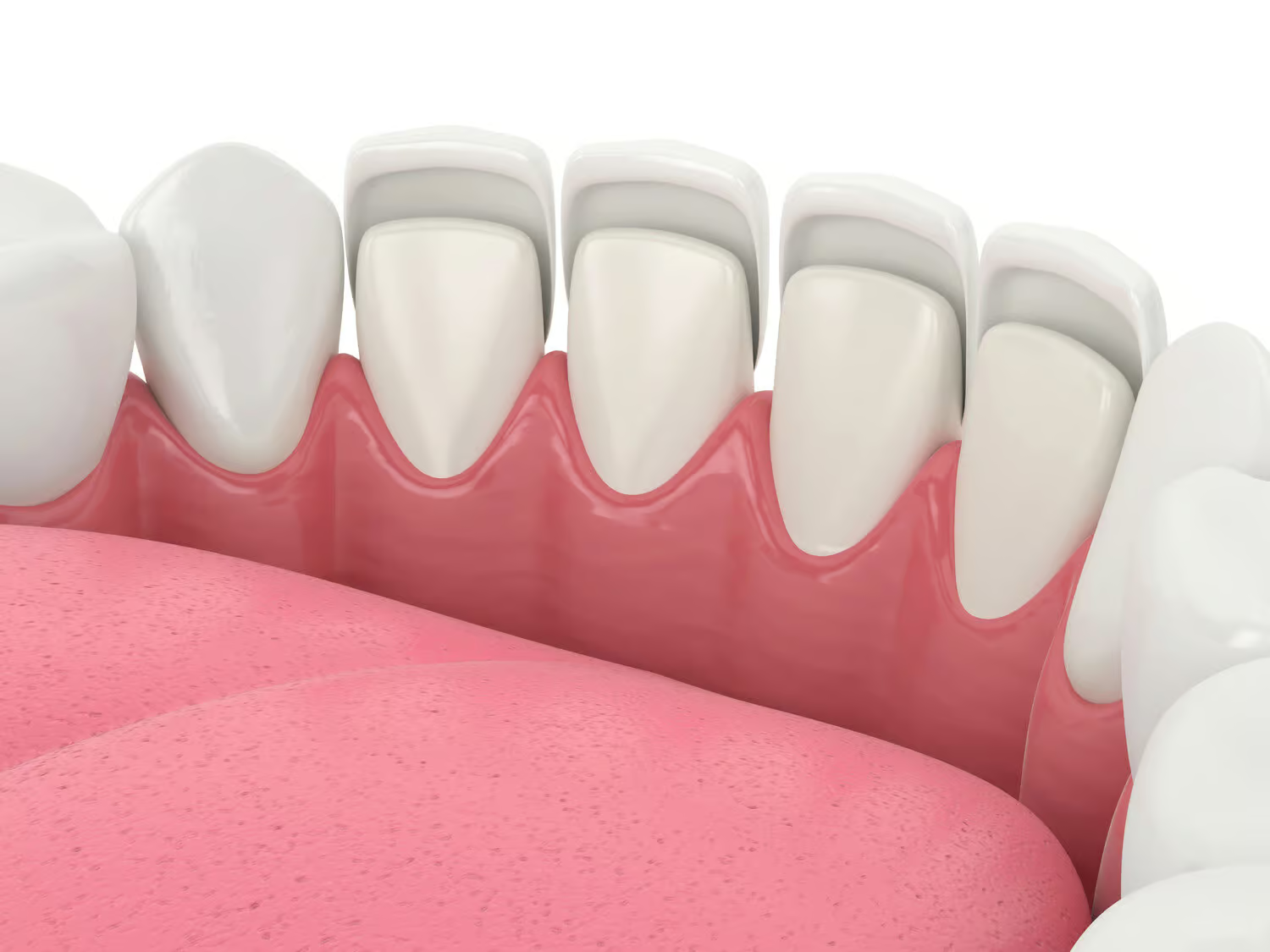
- Minimal enamel preparation, just enough to let the veneer sit naturally against your gumline
- Custom fabrication, built to match your bite and the teeth next to them
- Final placement, done in stages so each veneer gets checked before it's bonded for good
That staged placement matters more than people expect. We're not gluing four teeth in at once and hoping they match. Each one gets fitted, checked against the light, checked against your bite, then bonded. Small bite adjustments often happen right there in that final visit, not after the fact. We won't rush this part. Enamel prep is permanent, so getting the shape and fit right the first time protects the tooth underneath for the long run.
How many visits does this take? It depends on the case. A straightforward four-tooth job moves faster than a case where we're also correcting uneven edges or closing gaps. Either way, you're looking at a short series of appointments, not one long ordeal in a chair.
Curious what your own timeline would look like? That's what the consultation is for.
Partial Smile vs. Full Case: What Drives Your Plan
Here's something most people don't expect. Most veneer cases we see aren't full-mouth makeovers. They're a handful of front teeth, usually four to eight, that carry the whole smile when you talk or laugh. Discoloration whitening won't touch. A chipped edge from an old accident. A gap that's bothered someone since high school. That's the common case, not the exception.
So what shapes your treatment plan? Two things. First, how many teeth need veneers. A partial case covering your smile line is a different plan than one covering every visible tooth top to bottom. Second, how much correction you need beyond just color. Some people just want a brighter, more even shade across a few teeth. Others need us to reshape a tooth, close a gap, or square off something that's always looked a little crooked. That second factor moves the needle more than people think.
Not sure which one applies to you? That's what a consultation is for. We look at your smile, figure out what's driving the concern, and build a plan around it, not the other way around.
We always tell patients the same thing. Veneers work best when the plan matches the problem. Someone who needs shape correction on three teeth doesn't need eight veneers to get a great result. Someone chasing an even, camera-ready smile across their whole upper arch shouldn't settle for two or three and hope it blends. Every case gets sized to what's needed, nothing added just to add it.
Keeping Your Veneers Looking Natural for Years
Here's the truth about veneers: the placement day is just the start. What you do after matters just as much as the porcelain itself. With proper care, veneers commonly last 10-15+ years. That range isn't a promise, it's just how the material behaves when you treat it right.
So what does "treating it right" look like? Brush and floss like normal, veneers don't change your daily routine much. A few habits do make a real difference over time.
- Skip the ice chewing and pen caps. Porcelain is strong, not indestructible.
- Wear a nightguard if you grind your teeth. We'll tell you plainly if we think you need one.
- Watch the coffee and red wine. Veneers resist staining better than natural enamel, but the bond lines and your other teeth can still darken around them.
- Keep up with your regular cleanings. That's when we catch small issues before they become big ones.
We hear this a lot around Central Texas. Folks love their Tex-Mex and their barbecue, and both come with sauces and drinks that stain natural teeth over time. Veneers hold their color better.
Your bite matters more than people think, and that applies to every veneer patient, whether it's four teeth or ten. If your bite shifts or you clench under stress, that pressure lands somewhere. We'd rather build the plan around that from day one than fix a chip later. Patients who follow this simple care approach often stop thinking about their veneers at all. They just smile.
What Makes Porcelain the Right Material
Not all veneer materials are equal. Composite veneers can be placed in a single visit and cost less upfront, but they stain over time and typically need replacement within five to seven years. Porcelain doesn't stain, holds its polish well, and lasts significantly longer when bonded correctly.
The preparation process removes only what's necessary to seat the veneer flush with the surrounding teeth. When done conservatively, the underlying tooth remains healthy and intact. That's the standard we hold to: change the surface, protect what's underneath.
Porcelain Veneers FAQs
What patients at WM Dentistry ask before getting veneers.
View more Options

Dental Crowns

Implant-Supported Dentures