Replacing Missing Teeth in Waco | WM Dentistry
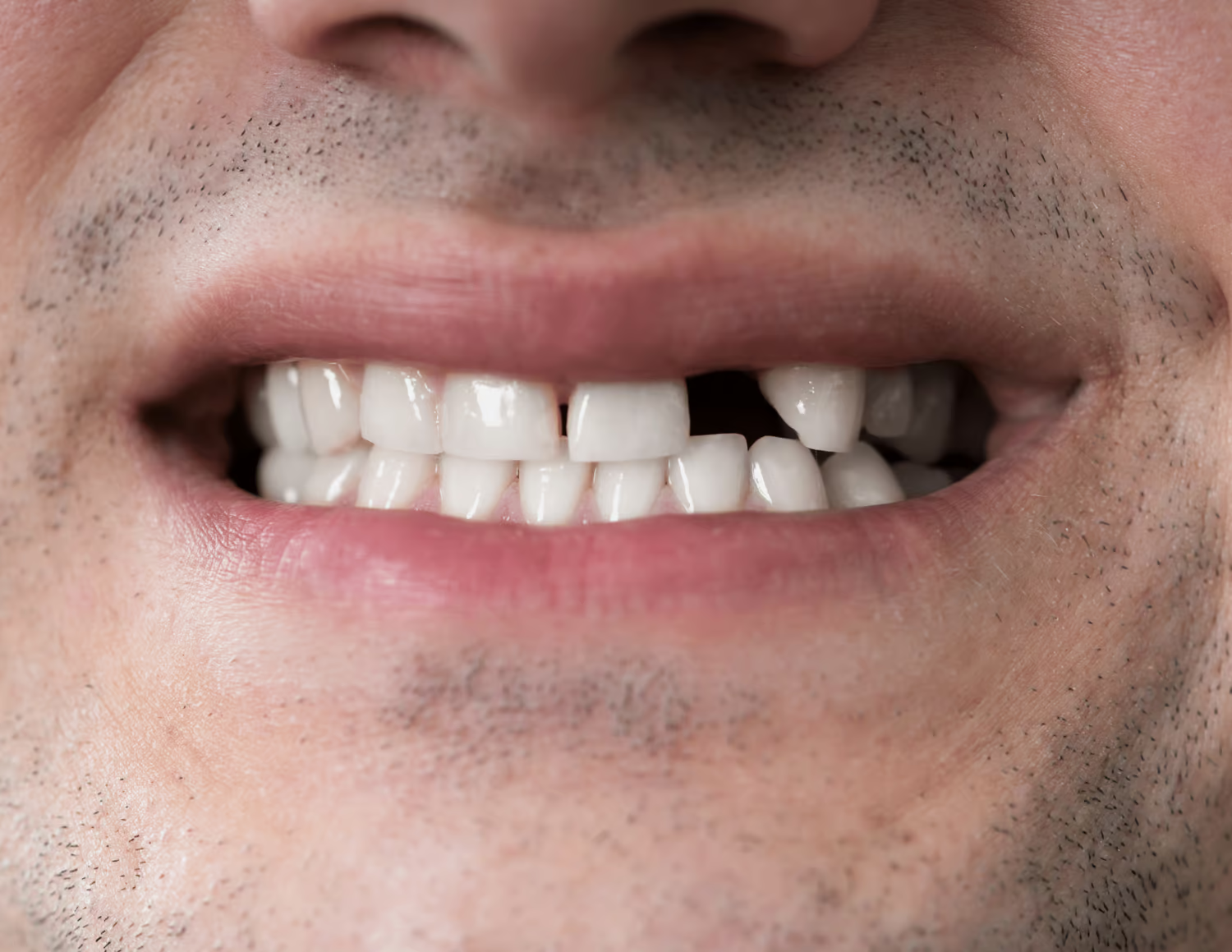
Signs a Missing Tooth Needs Attention
Most people don't call us the day a tooth falls out or gets pulled. They wait. A gap doesn't hurt, so it feels easy to ignore. Then the teeth around it start drifting into the space, or the bite feels different when you chew.
Here's what we tell patients to watch for:
- A gap that's been open more than a few months, even if it doesn't bother you day to day
- Teeth next to the space starting to tilt or shift, changing how your bite feels
- Trouble chewing on one side, or favoring the other side without realizing it
- A sunken look along the jaw where the tooth used to be
- Food constantly getting stuck in the same spot
The shifting is the part patients don't expect. A tooth doesn't just sit there missing, the neighboring teeth move toward the open space over time. That changes your bite, and it can make replacing it more involved than it would've been six months earlier.
Not sure if your situation counts? That's a fair, common question.
If you lost a tooth last week from an injury or a broken tooth situation, that's urgent. It's different from a gap you've lived with for years. Both need a look, just not on the same timeline. We check the jaw bone, the bite, and the health of the teeth around the space before recommending anything. Sometimes waiting a short while to plan properly is the right call. Other times the shifting is already underway and moving sooner protects more of your options later.
Comparing Implants, Bridges, and Dentures
Here's the honest answer: there's no single option. There's only the right option for your mouth. That's the whole point of replacing missing teeth the right way. It's why we don't hand every patient the same recommendation.
An implant works well when you're missing one tooth and the jawbone underneath is healthy enough to support it. It stands on its own, doesn't rely on neighboring teeth, and holds up the way a natural tooth root would. A bridge makes sense when you've got a gap flanked by strong, healthy teeth. Those teeth can anchor a replacement without an implant. Removable dentures come in when several teeth are missing, or when a patient prefers not to pursue implant surgery. And sometimes implants get used differently than people expect. Not as a single standalone tooth, but as anchors that stabilize a denture — this is exactly what an implant-supported denture does, so it doesn't shift when you're eating or talking.
What drives the decision:
- How many teeth need replacing, one tooth is a very different conversation than a full arch
- The condition of your jawbone and remaining teeth
- Whether you need extra support, like implants placed specifically to anchor a denture
- Your bite and how the replacement teeth will function day to day, not just how they'll look
We see patients come in assuming they need a denture when a single implant would serve them better. We see the opposite too. Neither guess is wrong to have, it's just not something you can diagnose yourself in the mirror. Dr. Morgan evaluates your oral health, jaw structure, and remaining teeth before recommending anything. He's not defaulting to whatever's easiest to sell. One note on scope. If you're missing all or nearly all of your teeth in an arch and need full-arch implant reconstruction, that's a specialized procedure. We refer that out rather than perform it in house.
When a Tooth Can Be Saved Instead of Replaced
Not every damaged tooth needs to come out. That surprises people. You'd be amazed how often someone comes in convinced they're losing a tooth. It turns out a crown or a root canal handles it just fine.
Here's the real test we use. If the tooth's root is stable and there's enough healthy structure left, saving it usually beats replacing it. A cracked tooth caught early is often a crown. A deep cavity that's reached the nerve is often a root canal followed by a crown. Even a tooth broken above the gumline can sometimes be rebuilt, depending on how much is left.
So when does replacement make sense? When the tooth is fractured below the gumline. When the root has a vertical crack. When there's been bone loss around it that a crown or filling can't fix. And when infection keeps coming back no matter what's been done before. That's usually the sign the tooth has run its course.
If a filling or a crown gets the job done, that's what we'll recommend. Not because it's simpler, but because a natural tooth you keep is almost always better than one you replace. Extraction and replacement only get discussed once we've confirmed the tooth genuinely can't be saved.
That's the whole point of the exam before any decision gets made. We're not looking at one tooth in isolation. We're looking at what's holding it in place and what condition it's in, not just what it looks like on the surface.
What Happens During Your Evaluation Visit in Waco
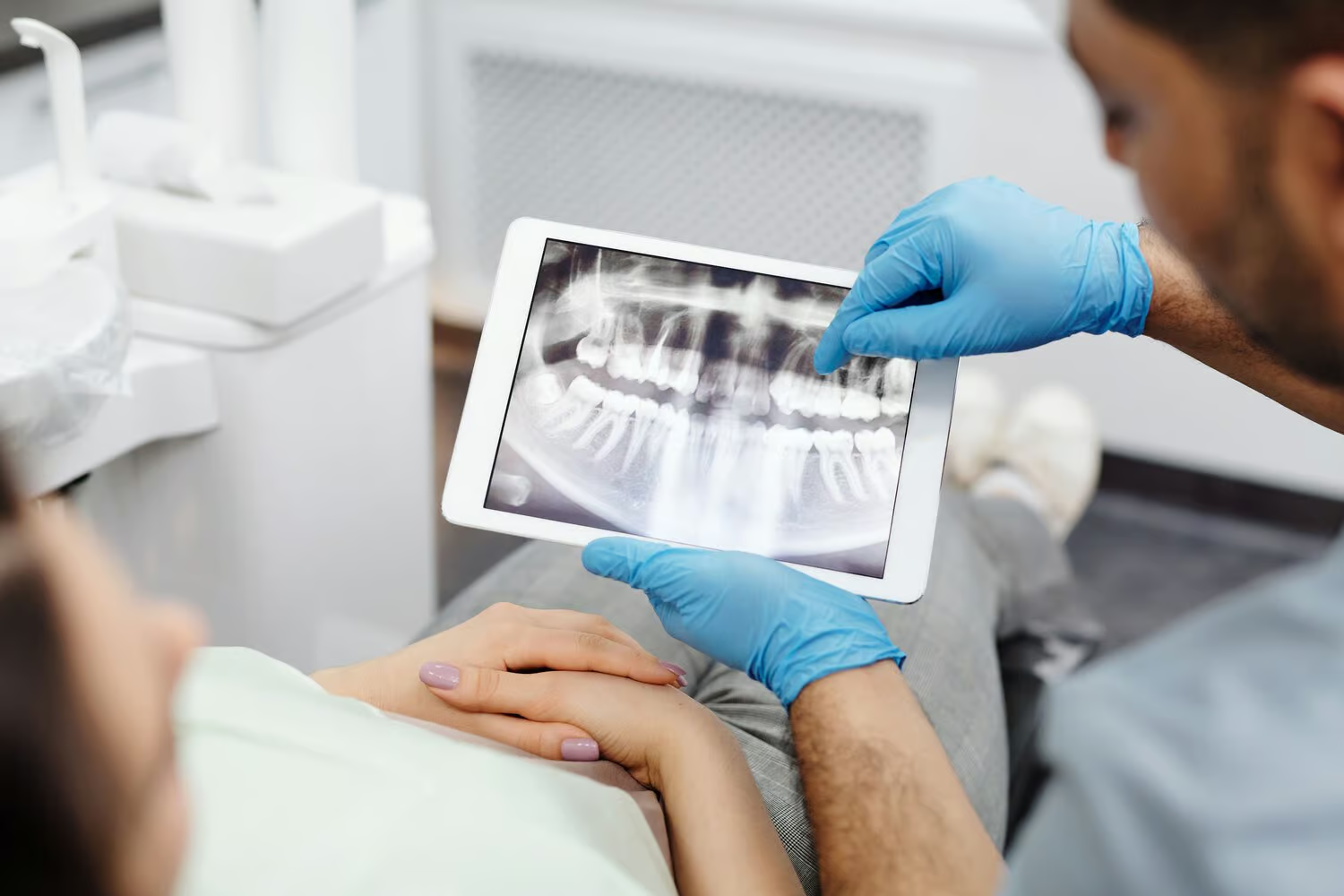
You don't walk in and get handed a treatment plan on the spot. That's not how good dentistry works, and it's not how we do it. The first visit is a full evaluation about finding out what's going on. Not just where the tooth is missing, but why, and what your mouth needs going forward.
Dr. Morgan starts with a full look at your oral health, your jaw structure, and the teeth you still have. That last part matters more than people expect. A missing molar changes how your bite works. Left alone long enough, the teeth around it start to shift. That's the real reason someone finally calls, not the gap, but the drifting and discomfort that showed up months later.
This exam usually covers:
- Your jaw bone density and structure, since this determines whether an implant is a straightforward option or needs extra planning
- The health and position of your remaining teeth
- Your bite and how the missing tooth or teeth affect it
- Any signs of gum disease or bone loss that need attention first
From there, Dr. Morgan talks through what fits your situation. Not a default answer, an actual conversation. Sometimes that's an implant. Sometimes a bridge makes more sense. If you're missing several teeth, it might mean a denture, or a denture stabilized with implants for a more secure fit. He'll walk you through the reasoning, not just the recommendation.
One thing we won't do here is push you toward the most expensive option because it exists. Function and long-term health drive the plan, not the other way around.
How Tooth Replacement Costs Are Determined
People ask about cost before they ask almost anything else. Fair enough. But there's no single number for replacing a missing tooth, because the real cost depends on what your mouth needs.
The biggest factor is how many teeth you're replacing. One tooth is a different conversation than three or four. So is the question of which option fits your jaw and your remaining teeth. An implant, a bridge, a denture. Each one solves the problem differently, and each one has its own cost structure behind it.
Here's what tends to move the price up or down:
- The number of teeth being replaced, not just the one you noticed first
- Whether an implant, bridge, or denture is the right fit for your bite and bone
- Whether you need extra support, like implants placed to stabilize a denture instead of relying on suction and adhesive alone
Before we recommend anything, Dr. Morgan looks at your oral health, jaw structure, and what's left of your natural teeth. That evaluation comes first, always. It's not a sales step, it's how we figure out what will last.
One thing we don't do here is treat a missing tooth as just a cosmetic gap to patch over. Function and bite matter as much as how it looks. And we don't do full-arch implant reconstruction, sometimes called All-on-X, in house. We refer that out to a specialist who focuses on it.
Ask any provider what's included in their evaluation before you commit to a plan. If the answer is vague, that's worth noticing.
Implant, Bridge, or Denture - What's Actually Different
These solve the same problem in three different ways. A bridge anchors to the teeth next to the gap. A denture replaces several teeth at once and can come out. An implant replaces the root itself, so the bone underneath stays active instead of shrinking. Which one's right depends on your jawbone, your remaining teeth, and how many spots need filling.
Replacing Missing Teeth FAQ
What Patients Ask Before Choosing How to Replace a Missing Tooth
View more Options
Composite Fillings

Same-Day Appointments