Partial Dentures in Waco | WM Dentistry

Signs You May Need a Partial Denture
Most people don't wake up and decide they need a partial denture. It's more like a slow accumulation of small annoyances until one day you're avoiding corn on the cob at a backyard cookout in Woodway and you realize something has to change.
Here's what we hear most often in the chair:
- You're missing one or several teeth, but not all of them, and the gap is starting to bother you when you talk or smile
- Food keeps getting stuck in the same spot, no matter how carefully you chew
- Your bite feels different than it did a year ago, teeth seem to be drifting or tilting toward the open space
- You catch yourself chewing only on one side of your mouth
- A tooth was pulled a while back and you never got around to replacing it
That last one is more common than you'd think. We see this every week: someone lost a tooth years ago and adjusted around it. They didn't think much of it until the neighboring teeth started shifting into the gap. Once that drift starts, it doesn't stop on its own.
Not sure if what you're dealing with counts as a real problem? That's a fair question. If you can still eat, smile, and speak without thinking about it, you may not need anything yet. But if you're guarding a tooth, skipping foods, or feeling self-conscious in photos, that's your answer.
Missing back teeth cause quieter damage than missing front teeth. There's no visible gap, so people put off dealing with it. Meanwhile the bite keeps shifting underneath the surface. A partial denture stops that drift and gives your bite something stable to work against again.
Partial Denture vs. Bridge, Implant, or Full Denture
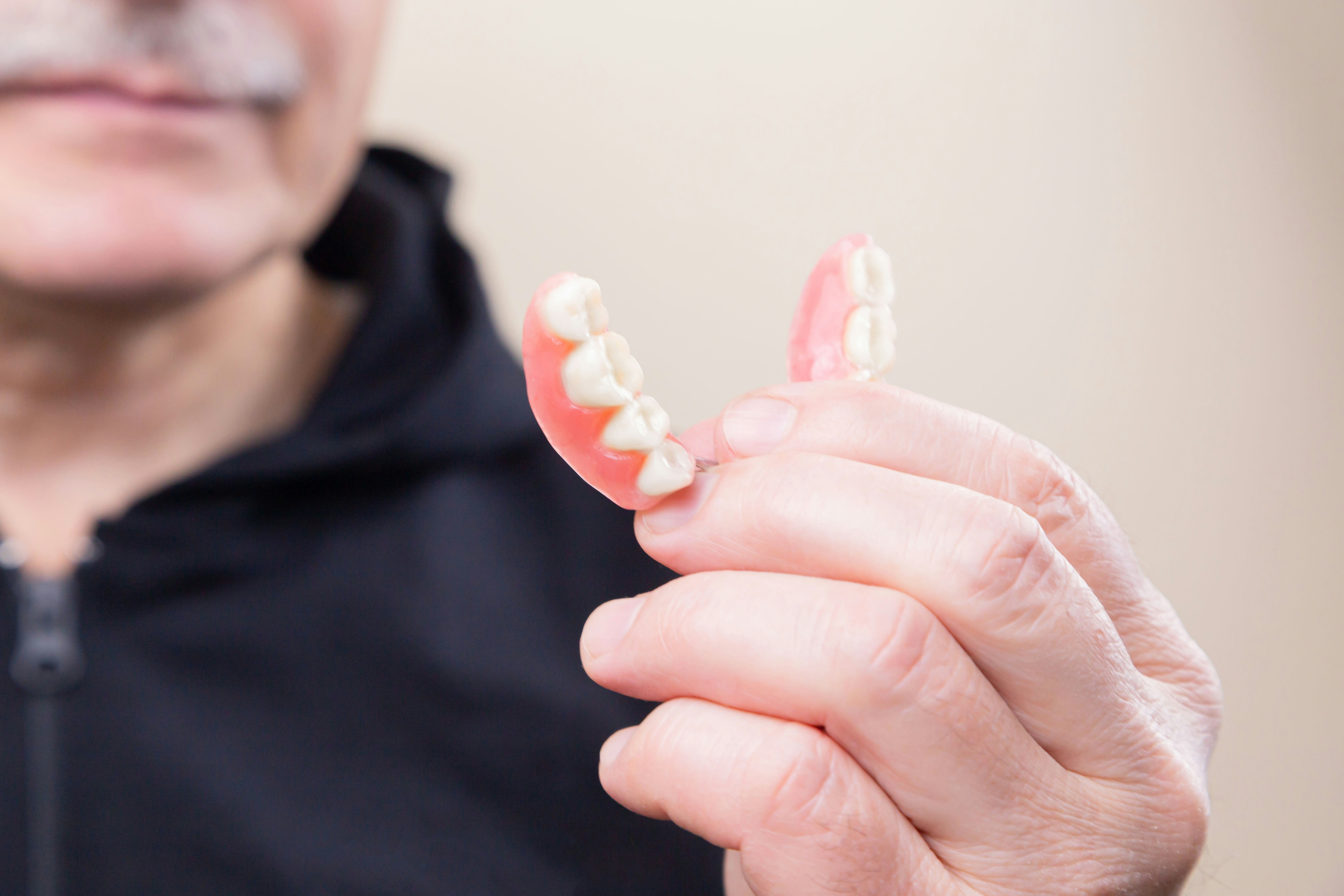
Missing a few teeth puts you at a fork in the road. Four main paths exist, and each one solves a different problem. A partial denture replaces several missing teeth using a removable appliance that clips onto your remaining natural teeth. A bridge does something similar but stays fixed in place, cemented to the teeth on either side of the gap. Dental implants replace teeth one at a time, anchored into the jawbone itself. A full denture only makes sense when every tooth in an arch is gone.
So how do you know which one is right for you? It usually comes down to how many teeth you're missing, where they're located, and what your remaining teeth can support. If you've got healthy teeth scattered around your mouth with gaps in between, a partial denture often fits the situation better than a bridge. A bridge typically only works for one gap at a time. And if your remaining teeth aren't strong enough to anchor a bridge, that option may not be on the table at all.
We look at a few things before recommending one option over another:
- How many teeth are missing, and where
- The condition and strength of your remaining natural teeth
- Whether your jawbone can support an implant
- How much time you want to invest in treatment
Some patients come in assuming they need a full denture when a partial denture would do the job. A partial often keeps more of their own teeth and costs less overall. Others need implants and don't realize it yet. That conversation happens during the exam, not before it. There's no one-size answer here, your mouth decides which path makes sense.
When a Partial Denture Isn't the Right Choice
Not every gap in your smile needs a partial denture. We see this every week, someone comes in convinced they need one, and the honest answer is they don't. If you're only missing one tooth, a single dental implant usually holds up better over the long run. It doesn't rely on your neighboring teeth for support. A partial denture that clasps onto healthy teeth can, over years, put extra wear on those teeth. That's not a reason to panic, but it is a reason to ask questions before you commit.
So when does a partial not fit? A few situations come up again and again in our Woodway office.
- You've lost most of your teeth on one arch, not just a few, a full denture may serve you better.
- Your remaining teeth are loose or have advanced gum disease. Clasping a partial onto them won't hold and can speed up the damage.
- You want something permanent and you're a good candidate for implants. In that case, a fixed solution might be worth exploring instead.
Here's another scenario we hear a lot. A patient in their 50s comes in with two back molars gone on one side and asks about a partial. But their bite has already shifted and their jawbone has started to change shape. In that case, we're not going to just say yes because that's the request. We're going to tell you what we see. If you're not sure whether a partial fits your situation, that's a normal question to bring to an exam. It's not something you're expected to know walking in. And if you're already leaning toward implants for missing teeth, say so. We'd rather talk it through than fit you for something you'll be unhappy with in a year.
The Partial Denture Fitting Process
Getting a partial denture right takes more than one visit. Patients come in expecting a single appointment and leave surprised at how much detail goes into the fit. That's a good thing. A partial that's rushed never sits right, and you'll feel every high spot when you chew.
Here's how it goes, step by step.
- We start with an exam and take a close look at the teeth you have left. Their strength and position decide where the clasps and metal framework will sit.
- Next, we take impressions of your mouth. These become the model your partial denture is built from, down to the millimeter.
- A dental lab crafts the framework and denture teeth to match the impressions and your bite.
- You come back for a try-in. This is where we check fit, color, and how your bite comes together before anything is finalized.
- Once everything checks out, we deliver the finished partial denture and make small adjustments right there in the chair.
- A short follow-up visit or two after that catches any sore spots early, while they're easy to fix.
That try-in step matters more than people expect. It's your chance to speak up before the partial denture is locked in, not after. Something feel off in the try-in? Say so. Small tweaks now save you from a denture that rocks or pinches later.
Same-day denture adjustments exist for a reason, too. A partial that felt fine on day one can feel different a week later. Your gums just need time to settle into wearing it. That's normal, not a sign something went wrong.
Most patients are surprised the whole process moves along in stages, not all at once. But that pacing is what makes the final fit comfortable instead of just "good enough."
Is a partial denture right for you?
A partial makes sense when you've got healthy teeth left, just with gaps between them. A few signs it might be time:
- Food keeps getting stuck in the same spot
- You're chewing mostly on one side
- A tooth was pulled a while back and never replaced
The process takes a few visits, not one. Impressions, a bite check, and a try-in before anything's finalized, so the fit feels right from day one.
Partial Dentures FAQs
Answers to the questions we hear most about partial dentures
View more Options
Root Canals
New Patient Exams