Recognizing When a Missing Tooth Needs Implant Treatment

Not every gap needs immediate attention. A missing back molar you've lived with for six months without pain isn't an emergency, but it's worth understanding what's happening underneath the gum while you wait.
Here's the thing most people don't realize until we point it out during an exam: the bone that used to hold your tooth root starts thinning the moment the tooth is gone. It doesn't wait for you to decide. Patients come in describing the same thing, a tooth that's been missing for a year or two. They're surprised to learn the bite has already started shifting around the space.
So how do you know it's time to look at implant dentistry specifically, rather than a bridge or a partial? A few signs point that direction. If neighboring teeth are healthy and you don't want to grind them down to anchor a bridge, an implant lets those teeth alone. If you're noticing food catching in the gap, or a neighboring tooth slowly tilting toward the space, that's the bone and bite adjusting to the loss. It's a sign to act rather than wait another year. If you've had a denture or partial that feels loose or shifts when you eat, that's often a sign. There isn't enough remaining tooth structure left to support it well anymore.
We start every case with a health history review and a bone support exam. That tells us whether the site is ready for a single-tooth implant right now, or whether grafting needs to happen first. Waiting rarely improves your odds, it usually just changes what the treatment looks like once you come in.
What Happens During a Single-Tooth Implant Evaluation
You come in, we talk. That's really where it starts. Before anyone talks about an implant, we need to understand what's going on with your health history. Certain conditions and medications change how bone heals. This isn't a formality. It's the difference between a plan that works and one that doesn't.
Next comes the bone support exam. We're checking the ridge where your tooth used to be, or where it's about to come out. We want to see if there's enough bone to hold an implant post steady. Some patients have plenty. Others lost bone months or years ago and need grafting first. You won't know which one you are until we look.
Then we plan the crown. The implant post is just the foundation, the crown is what people see when you smile or bite into something. Dr. Morgan matches it to the teeth next to it, shade, shape, size, so it doesn't stand out as "the fake one." That's the whole point of doing this in-house instead of handing you off somewhere else for the visible part.
Most single-tooth cases we see follow this exact path: health history, bone exam, crown plan. Then straight through to placement and restoration, all done here. Patients walk in expecting a complicated conversation and walk out with a pretty clear yes or no.
Some evaluations turn up something more involved, low bone volume, or a case that needs more than one tooth addressed. We'll tell you if that changes the plan. Full-arch cases get referred to a specialist. A single tooth usually doesn't.
When an Implant Isn't the Right Next Step
Not every missing tooth needs an implant right away. Sometimes the honest answer is: not yet, or not this way.
If you've lost significant bone where the tooth used to sit, an implant can't just go in and hold on its own. Bone support has to be checked first, that's part of any real evaluation. If there isn't enough, grafting comes before placement, not instead of it. Skip that step and you're setting the implant up to fail later, not now. We'd rather tell you that up front than watch it go sideways in a year.
Some patients come in assuming they need a full-arch solution when really it's one or two teeth. That's pretty common. Full-arch, or All-on-X, cases are a different animal entirely, different planning, different team, different timeline. Our practice refers those out to a specialist rather than forcing them into an in-house process they don't fit. If that's what your mouth needs, you deserve someone who does that work every day. Not a generalist stretching to cover it.
And if your health history includes certain uncontrolled conditions, healing has to be the priority before any implant conversation starts.
Here's a scenario we see: someone comes in after wearing a partial denture for years. The tooth's been gone so long they've stopped noticing the gap, until a checkup shows the jawbone has thinned out. That's not a same-visit decision. That takes a real exam, a real conversation, maybe a referral first.
So if you're not sure which category you fall into, that uncertainty is normal, not a red flag. The exam is where that gets sorted out, not guessed at.
Comparing Single-Tooth Implants to Bridges and Removable Partials
So you've got one missing tooth and three ways to fix it. A bridge, a removable partial, or an implant. They're not equal, and the difference shows up years down the road, not on day one.
A bridge replaces the gap by grinding down the two healthy teeth next to it and capping all three together. That means sacrificing enamel on teeth that were never a problem to begin with. Patients don't realize that until we explain it chairside. A removable partial skips the grinding, but it comes out at night and can shift while you eat. Most people describe it as something they tolerate rather than something they forget about.
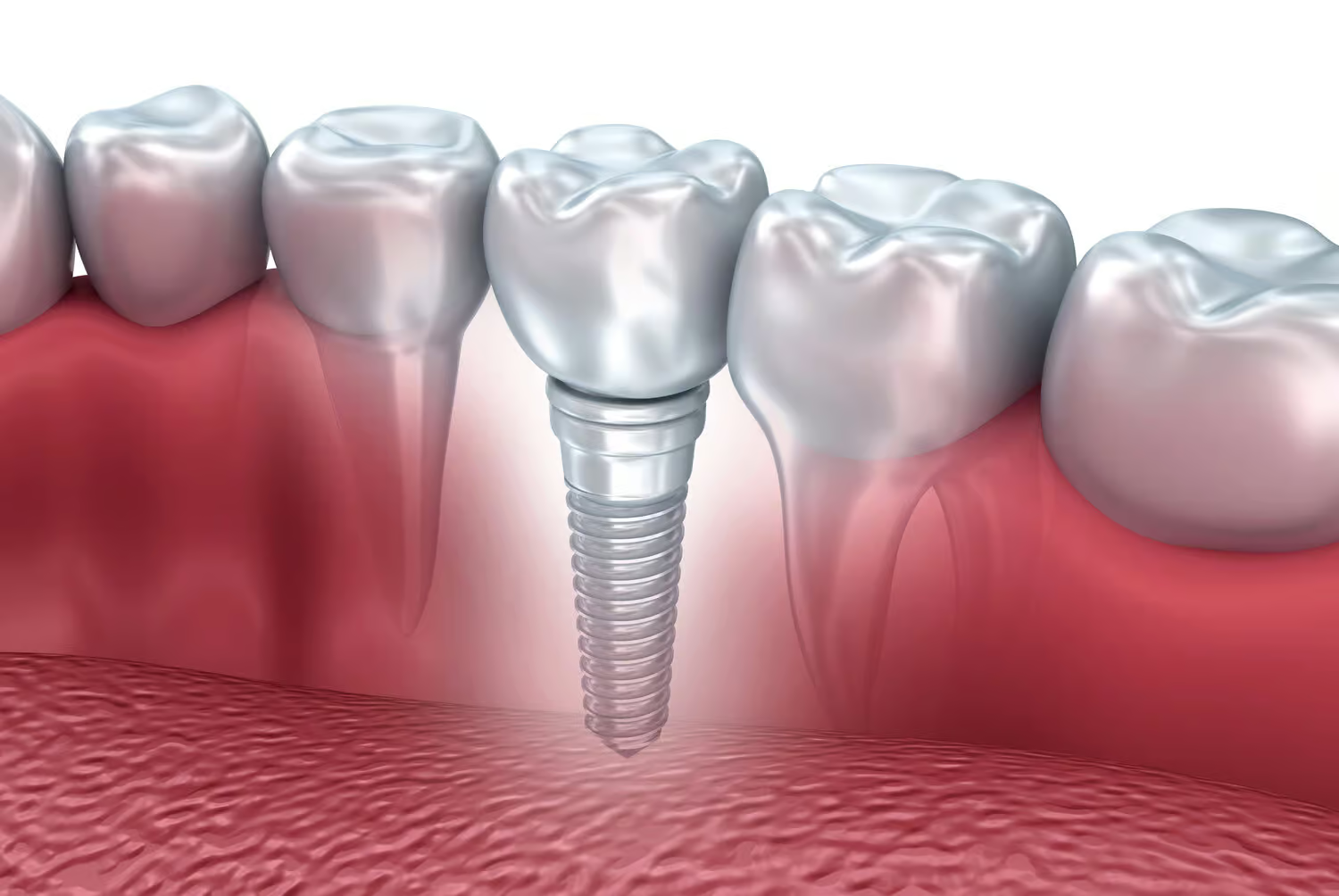
An implant works differently. It replaces the root, not just the crown, so the bone underneath stays active instead of shrinking over time. That's the real distinction. Bridges and partials replace what shows above the gum, an implant replaces what's holding everything up below it.
- Bridges require reshaping the neighboring teeth, even if they're healthy
- Removable partials come out daily and can feel loose or bulky
- Implants stand on their own and don't rely on adjacent teeth at all
For a single missing tooth, this is the job we do most often at our Woodway practice. Placement and a custom-crafted crown matched to the teeth around it, done in-house. We check your health history and the bone support underneath before we ever talk restoration. Not every case is a straightforward single implant, though. If you're missing several teeth or need grafting first, that changes the conversation. Full-arch cases are different, the kind where someone's replacing most or all of their teeth. We send those cases to a specialist rather than force them into a workflow that isn't built for it.
How Implant Cost and Complexity Are Determined
There's no flat number we can quote you before we look in your mouth. Any dentist who gives you one over the phone is guessing. What drives your cost isn't the implant itself, it's the situation around it.
The most common case we see is a single missing tooth. One implant, one crown, done in-house from start to finish. That's the job most patients come in expecting, and for a lot of people it really is that simple.
But three things move the number up or down. First, how many teeth you're replacing, one is a different project than three. Second, whether your jawbone has enough support to hold the implant, or whether bone grafting needs to happen first. We check this with a bone support exam before anything else gets planned. Third, the complexity of the crown restoration itself. Matching a single front tooth takes more craftsmanship than a molar nobody sees. Full-arch cases, sometimes called All-on-X, are a different animal entirely. We hand those cases to a specialist instead of handling them here, so we're not the ones setting that cost.
Before you get a number from anyone, ask what it includes. Does it cover the health history review and exam? Does it include the crown, or just the implant post? Is grafting already priced in, or is that a surprise waiting for you at the next visit?
A real treatment plan answers those questions before you leave the chair. Anything less isn't really a plan, it's a placeholder.
How a Dental Implant Replaces a Missing Tooth
This is what makes an implant different from a bridge or partial. A titanium post goes in where the root used to be, and the bone actually holds onto it instead of shrinking around an empty space. Once it's healed, a custom crown gets matched to your other teeth — shape, size, and shade — so it just looks like yours.
Dental Implant FAQ
What Patients Ask Before Getting a Dental Implant
View more Options

Clear Aligners
Broken Tooth