Broken Tooth in Waco | WM Dentistry
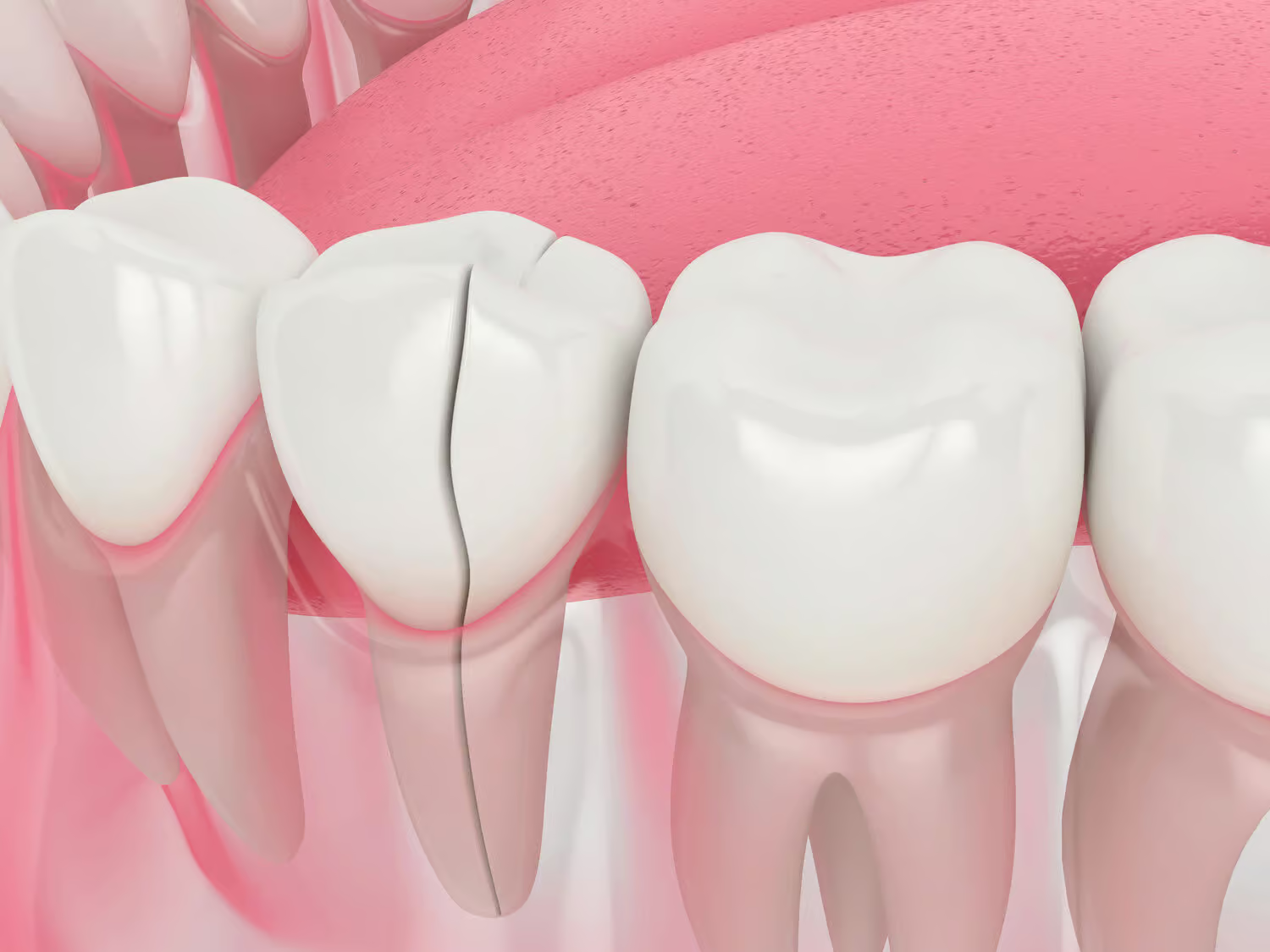
Spotting the Difference Between a Cosmetic Chip and a Structural Fracture
Not every broken tooth looks the same, and not every one needs the same kind of attention. A small chip on the edge of a front tooth might just be an enamel flake. No pain, no sensitivity, nothing but a rough spot your tongue keeps finding. A fracture is different. That's a crack running deeper into the tooth, sometimes toward the root. It usually comes with a warning sign your body gives you, whether you want it or not.
So how do you tell which one you're dealing with? Start with pain. A cosmetic chip rarely hurts. A structural fracture often throbs when you bite down, especially on that specific tooth. It can also ache with hot coffee and cold water both. That's a big tell.
- Sharp pain when chewing on one side, especially releasing pressure
- Sensitivity to temperature that lingers past a few seconds
- A visible dark line through the tooth, not just a broken edge
We get calls almost every week from someone who says "it's just a small chip" over the phone, then we look and find a crack heading straight toward the nerve. That's the tricky part. A fracture can hide behind what looks like minor damage.
Here's a scenario we see a lot. Someone bites into a piece of hard candy or an ice cube, feels a small snap, and figures it's nothing since there's no pain yet. Two days later that same tooth is throbbing at 2am. The crack was there the whole time, just quiet.
When a Broken Tooth Can Wait, and When It Can't
Not every broken tooth is an emergency. A small chip on a molar, the kind you find with your tongue after eating popcorn, usually isn't urgent. If there's no pain, no sharp edge cutting your cheek, and no visible nerve, you can typically wait. A regular appointment in a few days is fine. We hear this a lot: "It doesn't hurt, so it's probably fine." Sometimes that's true.
But here's where it changes. If you can see pink or red inside the broken area, that's the nerve, and it needs attention fast. Pain that comes and goes with hot or cold is another sign the tooth's inner layer is exposed. So is a fracture that reaches below the gumline, because bacteria get into places a toothbrush can't reach.
A few situations that mean don't wait:
- Sharp pain when you bite down, even lightly
- A visible crack running toward the gum
- Swelling in the cheek or jaw near the broken tooth
- A fever along with tooth pain
- Any piece of tooth that came out with the break, not just chipped off
We see this all the time. Someone breaks a tooth on a Friday, decides to "watch it" over the weekend, and by Monday morning it's swollen and throbbing. That delay almost always makes treatment more involved, not less.
So how do you tell the difference between wait and don't wait? Trust your body. Pain that's sharp, sudden, or getting worse day to day is your answer. Cosmetic chips with zero sensitivity can sit on the calendar a bit longer. If you're not sure which one you're dealing with, that's normal. It's exactly what a same-day exam is for.
What Happens During Same-Day Broken Tooth Repair in Waco
Here's what most people don't expect: fixing a broken tooth is usually faster than the panic that led up to it. You call, we get you in the same day. Dr. Jeremy Morgan takes a look before you've had time to finish worrying about it.
First thing we do is figure out what kind of break we're dealing with. A small chip on the edge of a front tooth is a different repair than a molar that's cracked down toward the gum line. We'll take an X-ray, check if the nerve is exposed, and ask you a few quick questions. Does it hurt with cold, does it throb on its own, can you bite down without wincing? That tells us almost everything we need to know.
From there, treatment depends on the damage:
- Small chips or edge fractures often get fixed with bonding, done right there in one visit
- Deeper cracks or missing chunks usually need a crown to protect what's left of the tooth
- If the break reached the nerve, a root canal comes first, then the tooth gets restored
We numb the area before doing anything that would otherwise hurt. Once you're comfortable, most bonding repairs wrap up in under an hour. Crown work takes longer since we're shaping the tooth and matching the fit. But you're not left walking around with a jagged edge or an exposed nerve in the meantime.
You'll leave with a clear plan. That's either a completed repair or a scheduled next step for something like a crown that needs a lab. Either way, the tooth gets stabilized before you go, no waiting around in pain while paperwork sorts itself out.
How Treatment Costs Are Determined for a Broken Tooth
Every broken tooth is different, and so is what it takes to fix it. A hairline chip on a front tooth calls for a different plan than a molar that's split below the gum line. The final cost depends on what we find once we look, not on a flat number someone quotes over the phone.
A few things drive the decision:
- How much of the tooth is still healthy and usable
- Whether the nerve is exposed or damaged
- If the break reaches below the gum line
- Which tooth it is, since front teeth and back molars need different approaches
- Whether a simple filling will hold, or the tooth needs a crown to survive daily chewing
Based on what we find, the fix falls into one of a few buckets. Bonding or a filling handles a small chip. A crown covers a tooth that's cracked but still has a strong root. A root canal comes into play when the break has reached the nerve and the tooth is aching or sensitive to temperature. In rare cases, when the tooth can't be saved, restoring the space becomes the real conversation.
Here's the thing nobody tells you: the x-ray is what sets the price. It's not about the way the tooth looks in the mirror. We've seen small chips that looked minor turn out to need a root canal. We've also seen scary-looking breaks that only needed bonding. You can't know until we take a look.
Before you commit to any treatment plan, ask your dentist one thing. What happens if the tooth ends up needing more than expected once they're inside it? A straightforward answer to that question tells you a lot about how the practice handles surprises down the line.
Preventing Future Breaks After Repair
Once we've fixed the tooth, the real question is whether it happens again. Most cracks and breaks aren't random. They follow a pattern, and once you know yours, you can usually avoid a repeat trip.
Ice chewing is a big one. So is cracking pistachio shells or popcorn kernels with your back teeth instead of your fingers. We see this on a regular basis. Someone just got a crown or a filling redone, and within a year they're back because an old habit crept in. If you grind your teeth at night, that pressure adds up fast. Cracked cusps and worn edges usually show up first on the same side you clench hardest.
A few things move the needle:
- Treat popcorn, ice, and hard candy like they're not food for your molars
- Get any tooth that's already cracked or has old, large fillings checked before it fails completely
- Wear a mouthguard for contact sports, no exceptions
- Keep up with your regular cleanings, so small cracks get caught while they're still small
If your break came from a large old filling giving out, a crown protects the whole tooth going forward. It does more than just patch another spot. For teeth that are more cosmetic than structural, veneers or bonding can also reduce the thin, chip-prone edges that break under normal biting pressure.
Here's the honest part. No repair is stronger than a healthy natural tooth. Protecting what we've fixed matters as much as fixing it in the first place. A crown can handle normal chewing for years. But it won't survive being used as a bottle opener or ice crusher any better than the original tooth did.
Come back in for your regular exam. We'll check the repair, look at your bite, and catch anything new before it turns into another broken tooth call.
Chip, Crack, or Something Deeper
A small chip and a real fracture can look almost the same at first — but they're not treated the same way. Pain when you bite down, or a tooth that aches with both hot and cold, usually means the crack runs deeper than it looks. An X-ray tells us for certain. From there it's either a quick bonding fix, a crown, or, if the nerve's involved, a root canal first.

Broken Tooth FAQ
What Patients Ask After Breaking a Tooth
View more Options

Fluoride Treatment
Lost Filling or Crown